Bee, Wasp or Hornet? How to Tell What Is Nesting on Your House
Look at the body first. Ohio State University Extension splits bees from wasps on hair: bees are covered in it, wasps are smooth, shiny and never carry pollen hairs. Then look at the nest. An open paper comb, a grey football and a hole in the ground belong to three different insects and three different jobs.
Hairy Or Shiny? That One Look Settles Most Of It
The Ohio Bee Identification Guide from Ohio State University Extension puts it simply. Wasps have four wings and chewing mouthparts just like bees, but they are smooth and almost hairless, they tend to have slender waists, and they will never have pollen carrying hairs. Bees are vegetarians that live on pollen and nectar, so they are built to carry it and they look fuzzy because of it.
Extension's yellowjacket fact sheet adds the same test from the other direction: yellowjackets have hard, shiny, mostly hairless bodies, unlike honey bees, which are covered with dense hair. Wasps and hornets also fold their wings lengthwise when they land and fly with their legs tucked close to the body, where a bumble bee looks like it is dangling.
What Is Actually Nesting Around Northeast Ohio Homes
A handful of species do most of the stinging around Northeast Ohio houses, and they sort out on body shape, color and where they build.
| What it is | How it looks | Where the nest is |
|---|---|---|
| Honey bee | Furry, amber and brown, moving flower to flower rather than at your food. | A cavity: a hollow tree, a chimney, sometimes a wall void. Relocation work, not extermination. |
| Bumble bee | Big, round and unmistakably fuzzy, legs hanging in flight. | Ground cavities, old rodent burrows, insulation in a shed wall. Small colonies. |
| Carpenter bee | Three quarters to one inch long, thorax furry in yellow, orange or white, the top of the abdomen bare and shiny black. | A round tunnel bored into bare wood: deck rails, fascia, eaves, the underside of a porch roof. |
| Paper wasp | Slim, long legged, shiny, drifting rather than darting. | An open umbrella of uncovered cells hanging from a single stalk, under an eave, a deck rail or a grill lid. |
| Yellow jacket | Short, blocky, bright yellow and black, fast and busy, the one at the trash can. | Hidden. Ground cavities and landscape stone, or wall voids, attics and crawlspaces. |
| Bald faced hornet | Large, black with an ivory white face and markings. A wasp by family, not a true hornet. | The grey paper football in a tree or under a roof peak, comb sealed inside a paper envelope. |
| European hornet | One to one and a half inches, mahogany brown thorax, yellow face, brown wings, banded abdomen. | Inside a protected cavity such as a hollow tree, with the entrance usually six feet up or higher. |
The naming causes half the confusion. Extension's fact sheet on European hornets and look alikes says the European hornet is the only true hornet in North America and the largest wasp species found in Ohio, so the bald faced hornet on the corner of your garage is a wasp wearing a better name. Carpenter bees get the same treatment in reverse. Extension's carpenter bee fact sheet is clear that they do not consume wood at all. They chew a gallery to nest in and feed on pollen and nectar like any other bee.
Read The Nest, Not Just The Insect
If the insect will not hold still, the nest will. Paper wasps build their cells out in the open, anchored by a single point, and they pick sheltered spots: roof overhangs, open sheds, the inside of an outbuilding. Bald faced hornets build the same kind of comb but wrap the whole thing in a paper envelope, which is why theirs looks like a lantern and a paper wasp nest looks like an umbrella.
Yellow jackets are the ones you find by accident, because they nest out of sight. Ohio State University Extension describes eastern yellow jackets nesting in ground cavities and around landscape stones and timbers, while the German yellowjacket commonly nests in wall voids, attics, crawlspaces and other enclosed cavities. Extension also notes that the German yellowjacket first appeared in Ohio in 1975 and is now the dominant species in the state. That is the one to keep in mind here, because a colony in a wall void gives you a steady stream of insects going into a gap in the siding and no nest to look at.
A hidden nest is the one that turns a yard chore into an emergency room visit. Push a mower over a ground nest, run a trimmer along a stone wall with a hole in it, or set a ladder against a soffit that has traffic going in and out, and a colony you never knew about announces itself all at once. Every one of those is ordinary September work around North Canton and the rest of Stark County.
Why They Get In Your Face In September
Nothing about the insect changed. The menu did. Ohio State University Extension's BYGL bulletin explains that once the drones and new queens finish developing in late summer and early fall, they no longer need protein, they need energy from carbohydrates, so the workers stop hunting soft bodied insects and go looking for sugar instead. That is the whole reason a wasp that ignored you in June is now inside your soda can at a September cookout.
Colony size arrives at the same moment. Extension's yellowjacket fact sheet puts a nest at roughly 4,000 to 5,000 workers and 10,000 to 15,000 cells by August and late September. More insects, a diet that points them at people, and a warm damp stretch of Ohio weather that keeps them flying: that is how a nest everyone walked past all summer turns into a problem in one week.
When It Stops Being A Nuisance And Becomes A Job For A Pro
Most nests in an open field can be left alone until frost does the work. The ones on a house cannot. The CDC counted 788 deaths from hornet, wasp and bee stings in the United States between 2011 and 2021, an average of 72 a year, ranging from 59 in 2012 to 89 in 2017, with 84 percent of those deaths among males. That is a small number against the whole country and a very large number if the person on the ladder is you.
- The nest is in a wall, soffit or attic: spraying the entrance drives a colony deeper into the void, and in the worst case it pushes them through the drywall into the room instead of out of the house.
- It is in the ground near where people walk: a colony this size defends the hole, and you do not get a warning before the first sting.
- It is above head height: a ladder, a can of spray and an angry colony put you in the worst possible place to flinch.
- Anyone in the house reacts badly to stings: then this is not a project to experiment with on a Saturday.
- You cannot identify it: if it might be honey bees, stop before anything gets sprayed.
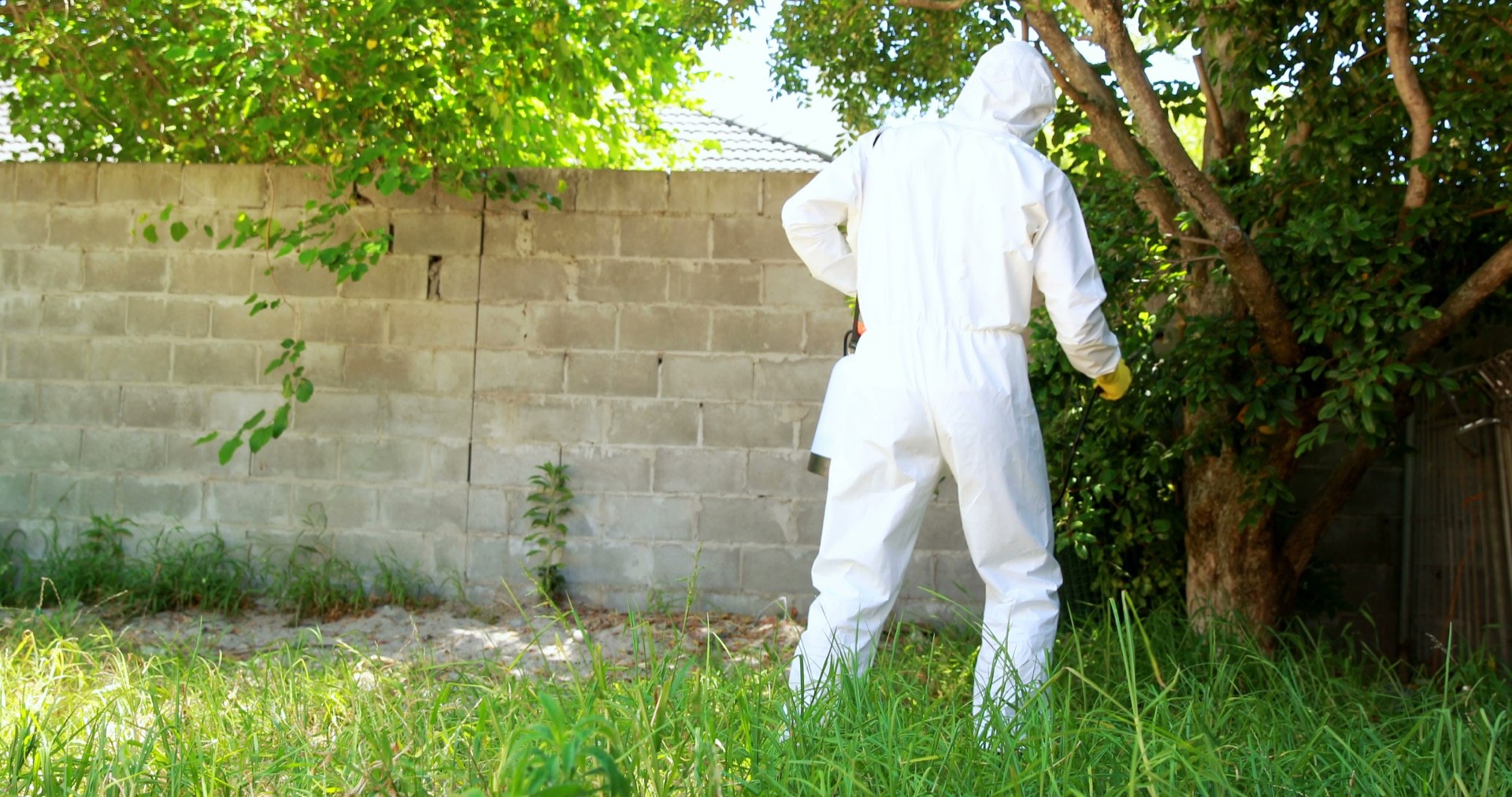
Our stinging insect control service is the removal side of this: the technician locates the nest, removes it in protective gear, and treats the places on the structure where the next colony would start. Wasps, hornets, yellow jackets and carpenter bees are all on that list.
If They Really Are Honey Bees, The Call Is To A Beekeeper
Honey bees are the one answer where pest control is the wrong phone call. The Ohio State Beekeepers Association keeps a swarm removal service that lets you find registered member beekeepers by county, or submit the details of what you are seeing so members get notified. The association also warns that yellow jackets and wasps are often mistaken for honey bees, which is exactly why the hairy versus shiny test at the top of this page is worth doing before you call anyone.
A honey bee colony living in a wall is a removal and relocation job with carpentry attached, and a beekeeper is the right person to scope it. A yellow jacket colony in the same wall is our job.
What Happens To All Of It After The First Frost
The colony dies. Ohio State University Extension describes fertilized queens overwintering in hollow logs, under the loose bark of dead trees, in soil cavities and other protected places, which means the nest itself is a one season structure that will not be reused next year. A grey football still hanging in a bare maple in January is an empty shell.
The opening is what carries over. A gap at a soffit return, a missing bit of mortar, a vent screen that rusted through: a new queen shopping for a cavity next spring finds the same one her predecessor did. Sealing it in October takes an afternoon. Keeping the rest of the house uninteresting through the year is what a quarterly plan like State Shield Essential is for, with four visits a year covering ants, spiders, millipedes, centipedes, mice, rats, bees, wasps and seasonal invaders. If pests come back between treatments, so do we, at no cost.
Not sure what you are looking at? Send us the location and what it looks like, or use our pest identification tool. If the nest is on the house and you want it gone, get a free estimate or call 330-494-6199. State Termite has been working Northeast Ohio since 1933, and nobody here is going to talk you into treating a nest that frost will handle on its own.
Frequently Asked Questions
I ran the mower over a nest in the ground. What do I do now?
Get away from the spot first, indoors if you can, because a disturbed colony defends the opening for a while after you leave. Then mark the area so nobody walks it, and keep pets off it. Do not go back at dusk with a flashlight and a can of spray, which is the classic way people get stung a second time. Yellow jackets nest in ground cavities and around landscape stone, and a September colony is at its largest, so this is worth handing to someone in protective gear.
Will the wasps use the same nest again next year?
No. The workers die off with cold weather and Ohio State University Extension describes fertilized queens overwintering somewhere else entirely: hollow logs, loose bark on dead trees, soil cavities and other protected spots. The paper nest is built for one season. What does repeat is the location, because the gap or cavity that suited one queen suits the next one, so sealing the opening matters more than taking down an empty nest.
Why are yellow jackets suddenly all over the trash can and the picnic table?
Their diet changed. Ohio State University Extension's BYGL bulletin explains that once the drones and new queens finish developing in late summer and early fall, they need carbohydrates rather than protein, so the workers switch from hunting insects to hunting sugar. That is why the same colony that spent June quietly eating caterpillars in your garden spends September at your soda.
Is a bald faced hornet really a hornet?
Not technically. Ohio State University Extension's fact sheet on European hornets and look alikes states that the European hornet is the only true hornet in North America and the largest wasp species found in Ohio. The bald faced hornet is a wasp with a hornet's reputation. It matters less for what you call it than for where you look, since the bald faced hornet builds the enclosed grey football out in the open and the European hornet hides its nest inside a cavity.
Carpenter bees are drilling into my deck. Are they eating the wood?
No. Ohio State University Extension's carpenter bee fact sheet is explicit that carpenter bees do not consume wood. They chew a gallery to nest in and feed on pollen and nectar, which also makes them pollinators. The damage is structural rather than dietary: the same tunnel gets extended year after year, and woodpeckers opening the gallery to reach the larvae usually do more visible harm than the bees.
Sources
- Ohio State University Extension, Ohio Bee Identification Guide (ENT-57)
- Ohio State University Extension, Yellowjackets (HYG-2075-11)
- Ohio State University Extension, European Hornets and Look-Alikes (ENT-0102)
- Ohio State University Extension, Carpenter Bees (HYG-2074)
- Ohio State University Extension BYGL, It's the Season for Yellowjackets, Paper Wasps, and Baldfaced Hornets
- CDC MMWR QuickStats, Deaths from Hornet, Wasp, and Bee Stings, United States 2011-2021
- Ohio State Beekeepers Association, Swarm Removal