West Nile Virus Is in Stark and Summit County Mosquitoes This Fall
West Nile virus is circulating in Northeast Ohio mosquitoes right now. The Ohio Department of Health's vector-borne disease surveillance update dated September 17 recorded West Nile positive mosquito pools in 36 Ohio counties, among them 102 in Stark County and 57 in Summit County. That is useful information about your own yard, and it is not a reason to panic.
A pool is a batch of mosquitoes collected from one trap, sorted by species and tested together. So the county counts describe how widely the virus is moving through the local mosquito population. They do not count infected mosquitoes, and they do not predict illness. What they do tell you is that the species carrying the virus is breeding successfully near where people live, which is the part a homeowner can act on.
What Ohio's Mosquito Testing Found This Month
The Ohio Department of Health publishes a running surveillance summary through the season. Here is what the September 17 update reported, with our service area pulled out of it.
| Ohio Department of Health surveillance, September 17 | Reported |
|---|---|
| Mosquito samples tested statewide | 14,756 pools, submitted by 53 agencies in 45 counties |
| Counties with West Nile positive pools | 36 |
| Stark County positive pools | 102 |
| Summit County positive pools | 57 |
| Tuscarawas County, La Crosse virus positive pools | 1 |
| Confirmed human West Nile cases, statewide | 7 |
Two of the five counties we serve are on that West Nile list, with Stark County carrying the larger of the two counts. Tuscarawas County appears on a separate line, for La Crosse virus, and that one is worth a paragraph of its own.
La Crosse virus is the quieter Ohio problem. The Ohio Department of Health reports that Ohio has recorded more human La Crosse cases than any other state, averaging about 20 a year, and that more than 90 percent of Ohio cases are in children younger than 15. The carrier is the eastern treehole mosquito, an aggressive daytime biter of wooded areas that lays eggs in natural tree holes and in containers people leave lying around. In an Ohio study of patients in the early 1980s, tires were associated with 36 of 81 cases and were the single largest source of the mosquito. If your house backs onto woods and you have kids, the junk pile at the treeline matters more than the porch light.
Does A Positive Pool Mean People Get Sick?
Usually not. The CDC reports that about 8 out of 10 people infected with West Nile virus never develop symptoms, and about 1 in 5 develop a fever with other symptoms. Roughly 1 in 150 infected people develop severe illness affecting the central nervous system, such as encephalitis or meningitis, and about 1 in 10 of those cases are fatal. There is no licensed vaccine and no medicine that treats it in people, which is why prevention carries the weight.
The Ohio Department of Health puts the state's long-run average at 47 human cases a year, with the record year being 2002 at 441 cases. Most Ohio cases are reported from July through October, and most people who get sick were bitten between early July and mid September. In other words, the exposure window that produces autumn cases is the one we are standing in.
Which Mosquito Carries It, And Where It Breeds
Ohio has 59 mosquito species according to the Ohio Department of Health, and only a few of them transmit disease. The one that matters here is the northern house mosquito, Culex pipiens. Ohio State University Extension names it the principal transmitter of West Nile virus and describes it as common across urban, suburban and rural habitats statewide.
Its breeding preferences are the reason this is a property problem rather than a wilderness problem. OSU Extension lists its egg-laying sites as catch basins, stagnant water in ditches, and containers of water with high organic matter, naming flowerpot saucers and clogged rain gutters specifically. Females lay eggs in rafts of up to 400, and larvae are full grown in about a week. OSU Extension's scrap tire fact sheet makes the same point harder: over one breeding season, thousands of mosquitoes can come out of a single discarded tire.
A week is the number to hold onto. Anything on your property that holds water for seven days can finish a generation. Walk the yard looking for these:
- Gutters packed with maple seeds and leaf litter, which is a late-September specialty in older Canton and Akron neighborhoods
- Flowerpot saucers, plant trays and the bottoms of decorative planters
- Birdbaths, pet bowls and kiddie pools nobody has touched since August
- Tarps over woodpiles, boats, grills and patio furniture, which sag and hold a pocket of water
- Old tires, wheelbarrows, buckets, recycling bins and toys left upright
- Corrugated downspout extensions, which hold water in every ridge
- Low spots in the yard, clogged ditches and the tray under a window air conditioner
Why Late September Still Counts Here
People treat Labor Day as the end of mosquito season, and the Ohio numbers say otherwise. Positive pools have been stacking up across the summer, and the Ohio Department of Health reports human cases through October, with most people bitten between early July and mid September. The tail of the season is inside the risk window, not past it.
There is a second reason this species keeps going later than people expect. OSU Extension notes that mated female northern house mosquitoes pass the winter in diapause and are common in basements, buildings and other subterranean places that stay above freezing. They are not looking for you in November. They are looking for a frost-free room, and a Stark County basement with a window well and a floor drain is a good one. A house that is easy for them to get into is worth sealing now, and the same gaps let in the fall invaders our quarterly pest plan is built around.
What Actually Reduces Mosquitoes Around A House
Source reduction first, because nothing else competes with it. Every container you empty is a generation that never happens. OSU Extension's guidance for Ohio homes adds a trick for water you cannot pour out: aerate a decorative pond with a small fountain or submersible pump, since mosquitoes cannot lay eggs on a broken water surface.
For the house itself, OSU Extension recommends filling gaps around windows and doors and keeping screens in good shape, with mesh of 16 by 16 or 14 by 18 squares per inch. For skin, it points to the EPA-recommended repellents, DEET and picaridin, applied according to the label. It notes that 10 to 30 percent DEET is effective for adults, and that picaridin suits kids well because it is odorless and feels less greasy.
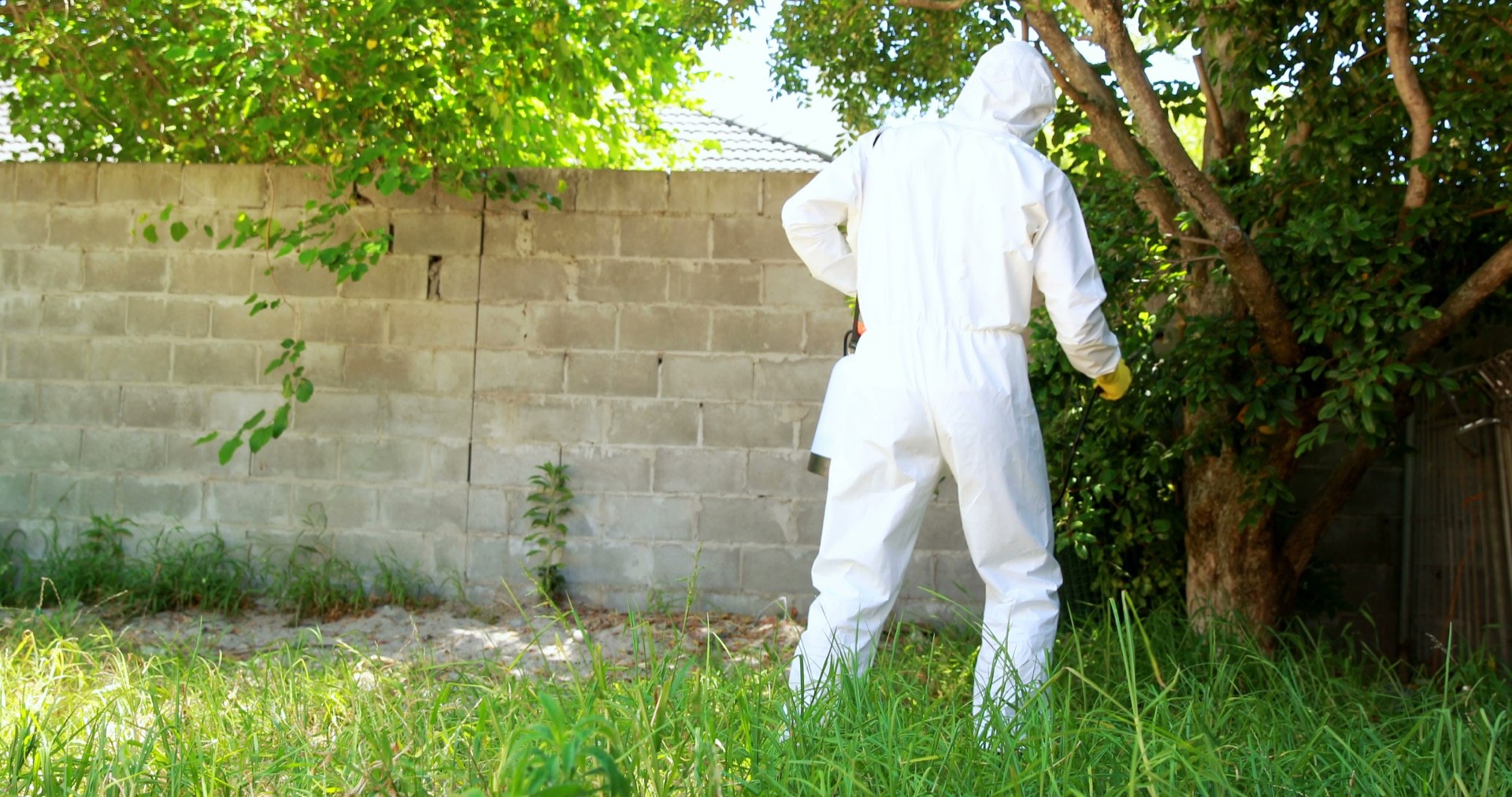
Professional treatment covers what a homeowner cannot reach. Our mosquito mitigation service works both ends of the life cycle: larvicide in the water that cannot be drained, such as catch basins and low ground that stays wet, and a barrier treatment on the shaded foliage where adult mosquitoes rest during the day. That resting habit is the reason a yard can be clean of standing water and still hum at dusk, because the adults commute in from a neighbor's ditch and settle in your shrub line. Households that want it handled every season without booking it each spring fold it into State Shield Plus, which pairs the pest plan with seasonal mosquito mitigation.
If the traps in your township are turning up positive and your yard still has bite pressure at dusk, get eyes on the property before the weather turns. Call 330-494-6199 or use our free estimate form, and we will walk the water sources with you. Most of what we find on a first walk is fixable with a bucket and twenty minutes, which is the best outcome there is.
Frequently Asked Questions
My county reported positive mosquito pools. How worried should I be?
Informed rather than worried. A positive pool means the virus is present in the local mosquito population, which is normal for Ohio in late summer and fall. The CDC reports that about 8 out of 10 infected people never develop symptoms and roughly 1 in 150 develop severe illness. The practical response is not fear, it is emptying standing water, fixing screens and using an EPA-recommended repellent at dusk.
When do mosquitoes actually stop being a problem in Northeast Ohio?
Later than most people assume. The Ohio Department of Health reports most human West Nile cases from July through October, so the risk window runs well past the end of summer. Activity drops as nights cool, and OSU Extension notes that mated female northern house mosquitoes then spend the winter in diapause in basements, buildings and other places that stay above freezing rather than dying off entirely.
Is it too late in the season for mosquito treatment to be worth it?
It depends on what you want from it. If you still have evening bite pressure, or a wet corner of the property that has been producing all summer, a treatment now reduces the adults and shuts down the water that would otherwise finish another generation. If you are quiet at dusk and the forecast has turned cold, the better spend is a walk of the property and a plan for spring.
What is the single most effective thing a homeowner can do?
Empty anything holding water, once a week, every week. OSU Extension puts northern house mosquito larvae at full grown in about a week, and describes the female laying rafts of up to 400 eggs in containers with high organic matter, including flowerpot saucers and clogged gutters. A weekly lap of the yard with a bucket beats every gadget sold for this problem.
Do I need to be home for a mosquito treatment?
Usually not. Mosquito work happens outside, so unless we need access to something locked or interior, you do not have to be there. Our treatments are pet-safe and kid-safe, and the technician will let you know what to keep off the treated foliage and for how long.
Sources
- Ohio Department of Health, Ohio Vector-borne Disease Surveillance Update
- Ohio Department of Health, West Nile Virus
- Ohio Department of Health, Mosquitoes in Ohio
- Ohio Department of Health, La Crosse Virus
- Centers for Disease Control and Prevention, About West Nile Virus
- Centers for Disease Control and Prevention, Symptoms of West Nile Virus
- Ohio State University Extension, Northern House Mosquito (ENT-89)
- Ohio State University Extension, How to Control and Prevent Mosquito Bites In and Around Ohio Homes (ENT-88)
- Ohio State University Extension, West Nile Virus and Scrap Tires (WNV-1004)