Can A Termite Inspection Be Done When The Ground Is Frozen?
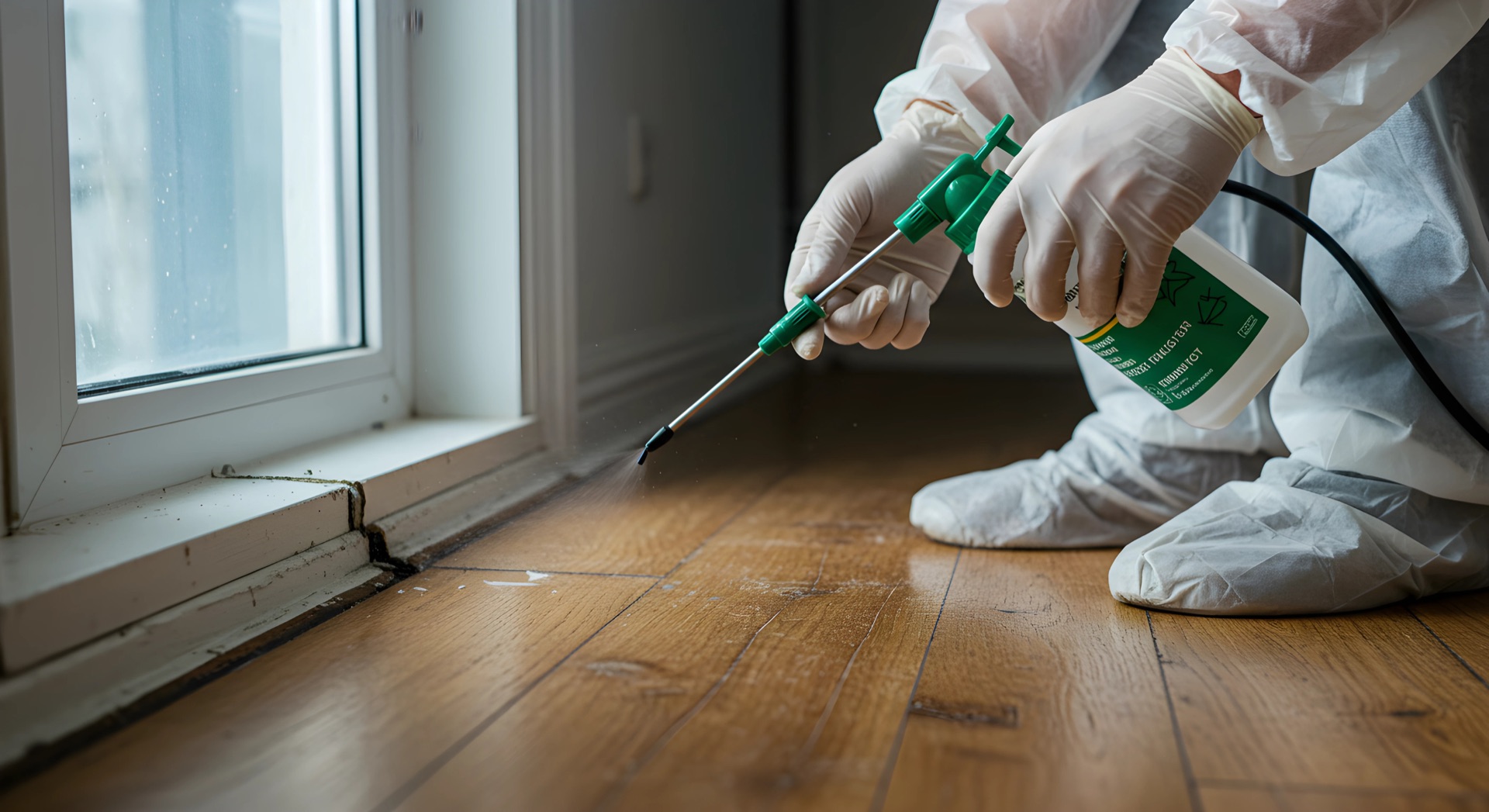
Yes. A wood destroying insect inspection is a visual inspection of the parts of a house a person can actually reach, and most of those parts are indoors: the sill plate, the basement walls, the crawl space, the garage. Frozen soil does not cancel the appointment. Snow changes what the report is able to say about the outside, and the form has a way of recording that.
Houses in Stark and Summit counties change hands in every month of the year, and lenders want the same document in January that they want in June. So the question comes up every winter: is this worth doing now, or does the cold make the whole errand useless? The honest answer has two halves, and they point in opposite directions.
What The Inspection Is Looking At In The First Place
Ohio State University Extension's study guide for pesticide category 12 describes the job as the examination of a structure involved in a contemplated real estate transaction for the current or past existence of wood destroying insects. Not the yard. The structure. That framing is most of the answer about winter, because the evidence that decides a real estate termite inspection sits where the wood meets the masonry, and that is under a roof.
The NPMA-33 report itself is written around the same limit. It covers readily accessible areas, with probing and sounding of unobstructed and accessible wood, and it says plainly that infestation or damage may exist in concealed or inaccessible areas. The inspector does not take insulation down, pull moldings off or move furniture to look behind it. Whatever was visible on the day is what the form speaks for.
Snow Is On The Form, By Name
This is the detail that settles most winter arguments. The NPMA-33 carries a numbered key of obstructions and inaccessible areas, and the inspector marks the ones that applied. On the 2004 edition the key runs to 24 entries, and snow is number 20, sitting in the same list as cluttered condition (14), standing water (15) and dense vegetation (16). The 2019 revision kept the key and added spray foam insulation and equipment to it.
So a buried foundation perimeter does not become a blank space or a guess. It becomes a line on the report that says this area was obstructed and here is why. That is the difference between a limited inspection and a quiet one, and it is worth reading closely when the report lands. Our walkthrough of what each block on the NPMA-33 means covers the rest of the page.
Two more access rules matter in January. The federal notice that accompanies the form lets an attic or crawl space be reported inaccessible when the opening is too small to get through, and a crawl space counts as inaccessible with less than 24 inches of clearance from the bottom of the floor joists to the surface below. And if an area that was reported inaccessible later becomes accessible, the inspection company can be contacted for another inspection. Snow melts. The report does not have to be the last word on the strip of ground it covered.
Where Eastern Subterranean Termites Actually Are In January
Deeper, and mostly idle. University of Georgia Extension Bulletin 1209, written by entomologists at Georgia and at Ohio State, says subterranean termites adjust their activity to seek suitable temperatures and migrate deeper into the soil when surface temperatures are unsuitable. The same bulletin says they will not forage when topsoil temperatures are either too hot or too cold, and that in climates with extremely cold winters, foraging is limited by nearly frozen or frozen topsoil. A study in the journal Environmental Entomology found almost no subterranean termite activity until temperatures increase in the spring, with overwintering colonies likely moving to depths where freezing is not encountered.
Read that on its own and winter looks like a bad month to go looking. Then comes the line that matters for a house: Bulletin 1209 says termites most likely remain active in cold weather if the structure they are infesting is heated. A furnace running in a North Canton basement is not frozen topsoil. It is a warm, damp pocket at the bottom of a building, and a colony already feeding in that sill plate has no reason to stop in February.
What Winter Hides, And What It Leaves Alone
Sorting the evidence by where it lives is more useful than arguing about the season. Here is how a winter inspection reads, piece by piece.
| Evidence | What winter does to it | Effect on the report |
|---|---|---|
| Mud tubes on an interior foundation wall | Nothing at all | Fully visible, and it is the clearest evidence the form asks about |
| Sill plate, band joist, basement window frames | Nothing, unless storage got stacked against the wall in October | Reads the same in February as in June once the wall is clear |
| The exterior perimeter at grade | Snow and ice bury it | Recorded as an obstruction, number 20 on the form's key |
| Crawl space | A frozen or snow packed hatch, plus whatever got stored down there | May be reported inaccessible, which is a line you want cleared before the visit |
| Wood to soil contact outside | Partly covered at the base of posts and stringers | Seen from above, not at the contact point, so note it for a later look |
| Swarmers | Not flying | University of Georgia Extension puts winged adults mostly in spring, so this one piece of evidence is simply not on offer in winter |
Clear These Before The Inspector Pulls In
Every item on the obstruction key is an area nobody gets to see, and half of them are avoidable with an hour of work. For a winter visit in North Canton, Canton, Massillon or Hartville, this is the short list.
- Shovel the foundation perimeter. A path a foot or two wide around the house turns an obstructed exterior into an inspected one.
- Open up the crawl space and attic access. Clear what is stacked in front of the hatch, and make sure it is unlocked and not frozen shut.
- Pull storage off the basement walls. Holiday boxes land against the exact surface the inspection needs, and the inspector will not move them.
- Move the firewood. Wood stacked against the house is both an obstruction and a condition conducive to infestation, which gets reported on its own.
- Turn the utilities on in a vacant house. Lights and heat matter more in a December basement than people expect, and a listed house between owners is often cold and dark.
- Unlock the garage and any outbuilding that the contract includes, because a detached garage is a separate structure on the form.
Is It Smarter To Wait For Spring?
Almost never, and the calendar usually decides it for you. Inspection periods run in days, lenders work to their own clock, and a purchase does not pause until the thaw. What the season really gives you is a question about follow up rather than about timing.
Treat the winter report as what it is: a complete look at the inside of the house and a partial look at the outside, with the gaps written down. If the obstructed list includes the perimeter or a crawl space, put a second look on the calendar for the first clear week. If you are buying and the house has any history of activity, ongoing monitoring answers the question better than any single visit, which is what the Sentricon system does from the soil around the foundation, with the one year renewable termite warranty that comes with it.
One thing worth saying out loud: a clean winter report is not a weaker document than a clean summer one for the part of the house that matters most. The sill plate does not hibernate.
Buying, selling or refinancing a house in Stark, Summit, Portage, Wayne or Tuscarawas County this winter? We handle termite work and WDI inspections on the NPMA-33 for sales, refinancing and VA loans, and the inspection fee is waived when you go with us for treatment. Book one here or call 330-494-6199, and tell us your closing date so the visit lands inside it.
Frequently Asked Questions
Can a termite inspection be done with snow on the ground?
Yes, and the form was built for it. The NPMA-33 includes a numbered key of obstructions, and snow is one of the listed entries alongside cluttered conditions, standing water and dense vegetation. The inspection goes ahead, the interior is covered normally, and any exterior area the snow covered is recorded as obstructed rather than passed off as inspected. Shoveling a path around the foundation before the visit shrinks that list.
If termites move deeper in the soil in winter, will the inspection find anything?
It finds what it was always looking for, which is evidence in the structure rather than insects in the yard. University of Georgia Extension Bulletin 1209 says subterranean termites migrate deeper when surface temperatures are unsuitable and will not forage in nearly frozen topsoil, but it also says they most likely remain active in cold weather when the structure they are infesting is heated. Mud tubes, damaged wood and staining stay where they are regardless.
Should we wait until spring to order the inspection?
The transaction usually decides this, not the weather. Inspection periods and lender timelines run on days, so the practical move is to inspect now and read the obstruction list carefully. If the perimeter or the crawl space is on it, schedule a second look once the ground clears. The form allows for exactly that: when an area reported inaccessible becomes accessible, the inspection company can be contacted for another inspection.
Our report lists areas as obstructed. What should we do with that?
Use it as a map of what the report is not covering. Every area on the key is a place no one could see, so the list tells you how much of the house the document speaks for. In winter that usually means the strip of ground around the foundation. Clear or re-check those specific areas rather than treating the whole report as provisional, because the interior findings are as solid as they would be in July.
Sources
- Ohio Department of Agriculture, NPMA-33 Wood Destroying Insect Inspection Report
- Office of Indiana State Chemist, NPMA-33 form and obstruction key
- U.S. Department of Housing and Urban Development, Wood Destroying Insect Inspection Report notice
- University of Georgia Extension Bulletin 1209, Biology of Subterranean Termites in the Eastern United States
- Environmental Entomology, Effects of Decreasing Thermophotoperiod on the Eastern Subterranean Termite
- University of Georgia Extension IPM, Subterranean Termites
- Ohio State University Extension, Category 12 Wood-Destroying Insect Diagnostic Inspection study guide