The Carpenter Bee Holes In Your Deck Are Not Empty Right Now
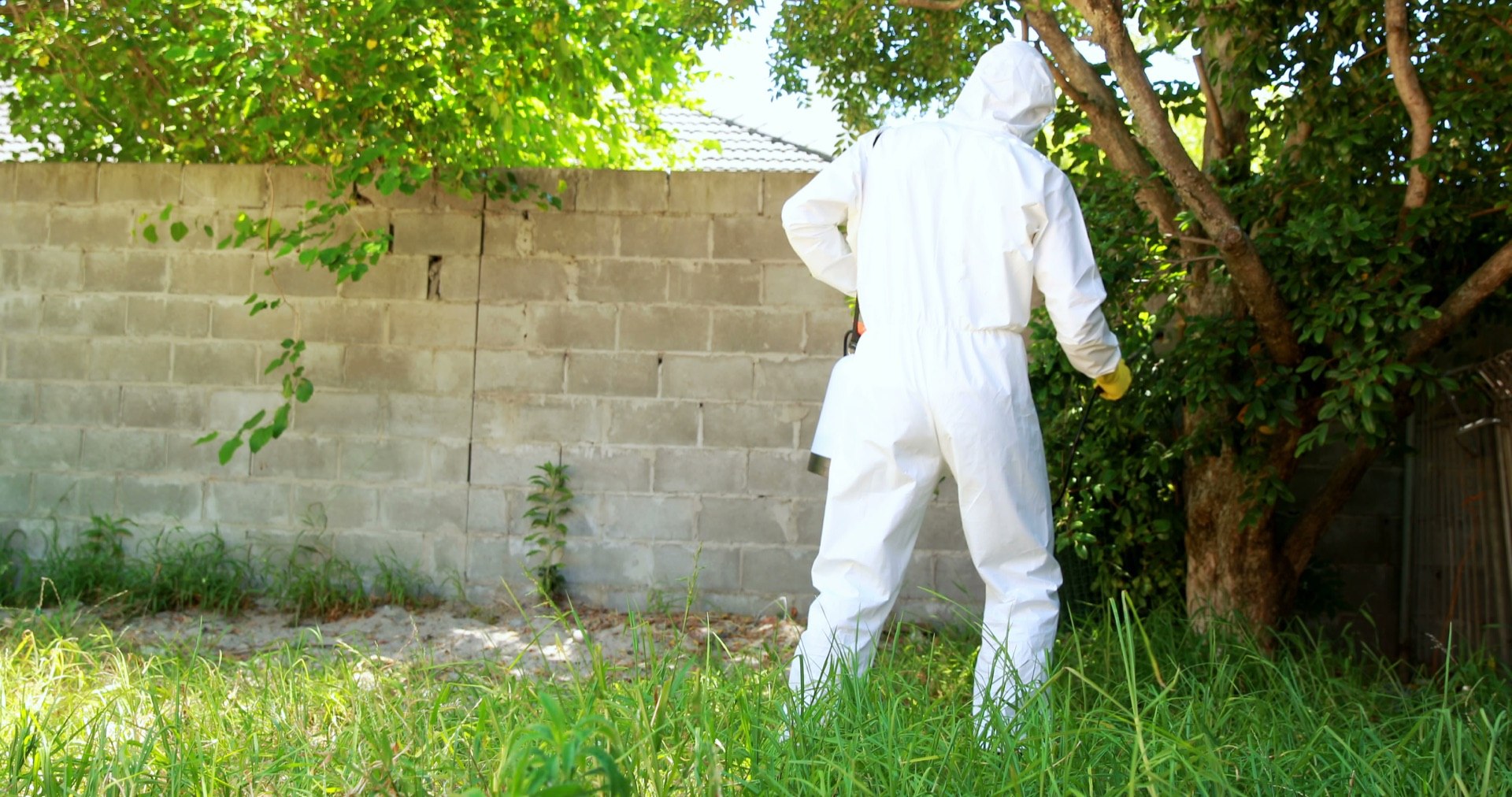
They are occupied. Ohio State University Extension says the adults that grow up in a carpenter bee gallery hibernate inside that same gallery over the winter and emerge the following spring. The holes under your deck rail are not leftovers from last May. They are where this winter is being spent, and they are where next May starts.
That changes what to do about them in October. Sealing a hole is the right idea in the wrong order, and the order is most of what follows. Our stinging insect control work covers the wasps and hornets that generate the emergency calls. Carpenter bees are the slow version of the problem, and fall is the stretch of the year when you can get in front of them.
What Is Actually Inside The Hole In October?
Adults, not an empty tunnel. Clemson Cooperative Extension describes adult female and male carpenter bees overwintering in abandoned nest tunnels in which they have stored small amounts of pollen, then emerging in spring, in April and May, to mate and look for nest sites. Ohio State University Extension puts it the same way from the other end: the new adults store pollen in the existing galleries, spend much of their time huddled together inside the gallery where they developed, and hibernate there until spring.
So the quiet is not progress. Nothing is going to leave that board between now and April on its own, which is the whole reason October is worth spending on this rather than waiting for the first bee to buzz the porch in the spring.
Why The Same Three Boards Get Hit Every Spring
Because a finished gallery is valuable and a new one is work. Ohio State University Extension notes that a female preferentially refurbishes an old nest rather than creating a new one, and the University of Maryland Extension describes tunnels being lengthened and reused year after year by successive generations. That is why the damage on a deck rail or a fascia board does not stay the same size.
| The Part | What Extension Measures | Why It Matters |
|---|---|---|
| The entry hole | Roughly half an inch across and almost perfectly circular (University of Maryland Extension) | Nothing else on an Ohio house leaves a hole that round |
| The first turn | Runs 1 to 2 inches straight in, then turns at a right angle to follow the grain (University of Maryland Extension) | What a flashlight shows you is a fraction of what has been cut |
| A young gallery | About 4 to 6 inches (Clemson), 6 to 12 inches (University of Maryland Extension), 6 to 10 inches deep (University of California IPM) | One season of work is shallow and mostly cosmetic |
| A reused gallery | Measured as long as 10 feet where generations have worked the same wood (Clemson, Ohio State University Extension) | The damage is cumulative, so the age of the problem matters more than this year's activity |
| The wood they pick | Pine is a perpetual favorite (Michigan State University Extension) and they prefer wood more than 2 inches thick (Penn State Extension) | Deck rails, fascia, pergola beams, barn and outbuilding trim, play set frames |
A single season of tunneling in a rail is a cosmetic complaint. A beam that has been refurbished by successive generations for a decade is a different conversation, and nothing about the outside of the board tells you which one you are looking at.
The Woodpecker Is The Second Half Of The Damage
If a fascia board carries a row of round holes and a ragged trench torn open above them, two different animals made that. The University of Maryland Extension points out that woodpeckers cause further damage when they hunt for carpenter bee larvae, and a bird working a known gallery is not making half inch holes. It opens the board up.
That is worth knowing in October for a practical reason. The galleries are full of larvae and hibernating adults all winter, which is exactly what a woodpecker is looking for in the months when other food is scarce.
Is Fall Really The Time, Or Should This Wait For Spring?
Both windows are real, and the published guidance names them. The University of California Statewide IPM Program describes treating tunnels either in early spring, before nesting activity has begun, or in fall, after all adult bees have emerged and are settling in to hibernate through the winter. Penn State Extension builds the fall window into its schedule as well, with a treatment in early fall aimed at contacting the overwintering bees occupying the tunnels.
The fall window has one plain advantage. Everyone is home. In April the bees are flying, mating and prospecting for new sites, and a male hovering at head height in front of the garage is a nuisance that makes people swing first and think later.
Why Sealing Is The Last Step And Not The First
This is the part that goes wrong. The instinct is to reach for the caulk gun, because a hole is a hole. Penn State Extension says plainly not to plug the holes immediately, because the bees need to be able to pass freely through the entrance, where they pick up the treatment and carry it into the tunnel. Clemson gives the sequence a clock: treat, and after twenty four hours plug the tunnel entrances with wood putty, caulking compound or a wooden dowel coated with wood glue, which also stops other nesting bees from taking the gallery over. The University of California IPM guidance is the same shape, a day or two of waiting before anything gets sealed.
Caulk first and you have sealed a live gallery behind a plug and left the board on the menu. We do not publish application instructions, because the treatment half of that sequence is licensed applicator work in Ohio. The repair half is honest weekend work once the first half is done. If you want to know who is allowed to do which part, our post on checking an Ohio pest control license walks through it.
What Keeps Them Off The Board Next Year
Prevention here is about the surface and the material, and the sources are unusually consistent about which choices matter.
- Paint, not stain. Clemson calls a painted surface, oil based or polyurethane, the most effective deterrent to carpenter bee activity, and says wood stains provide little repelling action. That distinction matters on a cedar deck that has only ever been stained.
- Expect a deterrent, not a force field. Michigan State University Extension notes that painted or treated wood is less likely to sustain holes but can still be damaged. Paint moves the odds, it does not close the question.
- Change the material where it keeps happening. The University of California IPM program recommends building susceptible exterior parts of a structure out of hardwoods, which are not normally attacked for nest building.
- Fill the old galleries once they are handled. A refurbishable nest is the thing a returning female is looking for, so an open tunnel left over the winter is an invitation with an address on it.
- Walk the boards that actually get hit. Deck rails and the underside of rails, fascia and soffit edges, porch and pergola beams, outbuilding siding, swing sets, and the trim above a window where nobody ever looks up.
They Are Pollinators, Which Complicates It
Worth saying out loud, because it is true and it shapes the job. Ohio State University Extension is explicit that carpenter bees feed on nectar and pollen and do not consume wood at all. They are native bees doing native bee work, and the damage is a side effect of where they chose to raise young. The target is the galleries in a structure, not bees in a yard, and we take the same line on this that we take on pest control around pollinators generally.
State Termite has worked on Northeast Ohio houses since 1933, and a deck rail, a barn trim board and the fascia over the garage are the same question in North Canton and across Stark, Summit, Portage, Wayne and Tuscarawas counties. If there is a row of round holes on your place and you would rather not count ten of them next June, send it through our request form for a free estimate or call 330-494-6199.
Frequently Asked Questions
Can I just caulk the holes now and be done with it?
Sealing on its own puts a plug in front of live bees. Penn State Extension says not to plug the holes immediately, because the bees have to be able to move through the entrance to pick the treatment up and carry it into the tunnel. Clemson puts twenty four hours between the treatment and the plug, and the University of California IPM guidance says to wait a day or two so every adult has been exposed. Clemson also notes the reason sealing still matters once that is done: a plugged entrance stops other nesting bees from moving into the gallery.
The bees stopped flying weeks ago. Did they die off for the winter?
No, they moved in. Clemson Cooperative Extension describes adult males and females overwintering in abandoned nest tunnels where they have stored small amounts of pollen, then emerging in April and May. Ohio State University Extension describes the same thing from inside the gallery: the new adults huddle together in the tunnel where they developed and hibernate there until spring. A silent deck rail in October means the bees are in the wood, not that they are gone.
Will painting my deck stop carpenter bees?
It helps more than anything else you can do to the surface, and it is not absolute. Clemson Cooperative Extension calls a painted surface, oil based or polyurethane, the most effective deterrent to carpenter bee activity, and is blunt that wood stains provide little repelling action. Michigan State University Extension adds the caveat worth keeping: painted or treated wood is not as likely to sustain holes but still can be damaged. Where a board keeps getting hit, the University of California IPM program suggests rebuilding that part in hardwood, which these bees do not normally attack for nesting.
Why is a woodpecker tearing at the fascia right where the holes are?
It is after what is inside. The University of Maryland Extension notes that woodpeckers cause further damage while hunting carpenter bee larvae, which is why a board can end up with neat half inch holes and a torn open trench in the same spot. In winter the galleries hold larvae and hibernating adults, so a known gallery is a reliable food source in the months when the bird has few others. Fixing the bee problem is what eventually ends the woodpecker problem.
If I seal the old holes, will they just drill new ones?
Some will try, but you have taken away the easy option. Ohio State University Extension notes that a female preferentially refurbishes an old nest rather than creating a new one, and the University of Maryland Extension describes tunnels being lengthened and reused year after year by successive generations. That reuse is what turns a shallow tunnel into something much larger over time: Clemson and Ohio State both report galleries measured at about 10 feet where many bees have worked the same wood across years. Closing the old galleries and painting the surface is how you stop feeding that cycle.
Sources
- Ohio State University Extension, Carpenter Bees (HYG-2074)
- Clemson Cooperative Extension HGIC, Carpenter Bees
- University of Maryland Extension, Carpenter Bees
- Penn State Extension, Carpenter Bees
- University of California Statewide IPM Program, Carpenter Bees
- Michigan State University Extension, Carpenter Bees: Another Home-Wrecker