Pest Control And Pollinators: What The Label Decides
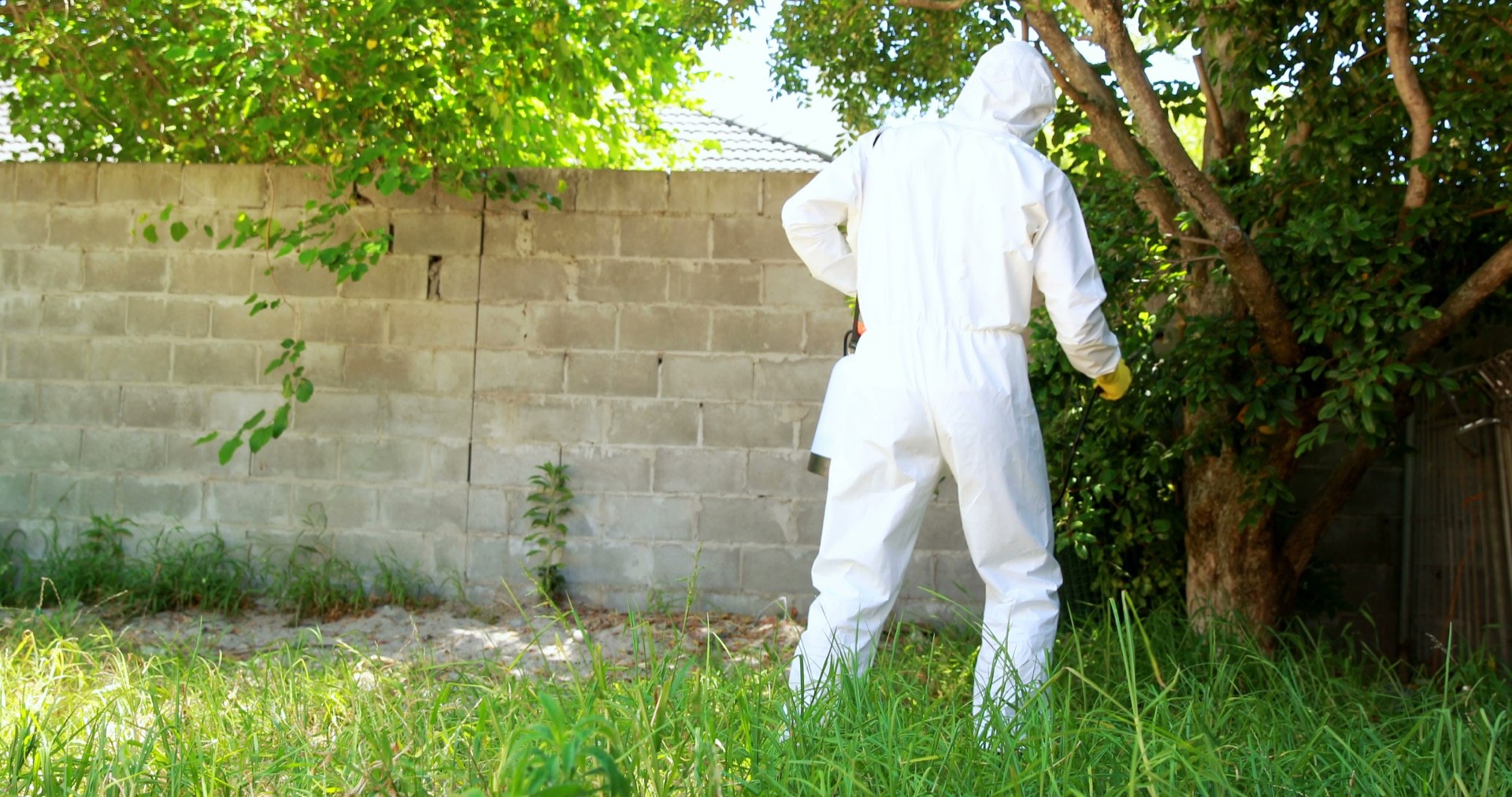
It can, and preventing exactly that is what a pesticide label is written to do. Treating a yellow jacket nest beside a back door and spraying a flower bed in bloom are two different acts with two different sets of rules. What protects the bees in an Ohio yard comes down to three things: what gets treated, where the product is allowed to go, and when it is applied.
Who The Pollinators In An Ohio Yard Actually Are
Mostly not honey bees. Ohio State University Extension's pollinator quick guide for native bees (ENT-80) puts roughly 500 native bee species in Ohio and names mason bees, mining bees, leafcutter bees and sweat bees among the common types. They are not kept in hives and they are not on anyone's inventory. They are in bare soil, in hollow stems, under the mulch, in the gap behind a fascia board.
Bumble bees are the ones most often mistaken for a pest, because they nest low and out of sight. University of Illinois Extension describes bumble bee nests in abandoned rodent burrows, near or under stones and logs, and under leaf and grass clippings, and notes that only newly mated queens live through the winter. A bumble bee colony in the grass at the far corner of a lot in the middle of October is a colony already on its way out.
This is why the insect decides the job before the product does. Yellow jackets and bald faced hornets are wasps, and a nest at a doorway or in a wall void is a sting problem that gets handled. A ground nest nobody walks past may need nothing at all. Our guide to telling a bee from a wasp or a hornet covers that identification step, and it is the step that decides everything after it.
Where The Bee Rules Live On A Pesticide Label
In two places, and neither is the front of the bottle. Ohio State University Extension's fact sheet on protecting pollinators while using pesticides (ANR-68) says to check the environmental hazards section of the label for warnings about bees. On top of that, the U.S. Environmental Protection Agency required a bee advisory box in 2013 on labels for products containing clothianidin, dinotefuran, imidacloprid and thiamethoxam. The box states in red letters that the product can kill bees and other insect pollinators, explains the routes of exposure, and carries spray drift precautions.
| What you want to know | Where it is written | What it tends to say |
|---|---|---|
| Can this kill bees? | Environmental hazards section, plus the bee advisory box on the four neonicotinoid actives | In red letters on those labels: this product can kill bees and other insect pollinators |
| How would bees get exposed? | The routes of exposure listed in the advisory box | Contact from foliar sprays, and nectar and pollen from plants treated through the soil or the seed |
| Can it go on plants in bloom? | Directions for use | EPA writes separate directions for contracted pollination, for blooming crops and ornamentals attractive to bees, and for non-agricultural use |
| Where outdoors can it go? | Directions for use on non-agricultural outdoor products | On pyrethroid labels, no direct application to sidewalks, driveways and patios except as a spot or crack and crevice treatment |
| What about drift? | Spray drift precautions in the hazards language | Keep it off neighboring blooming plants, and Extension adds the simplest version: not on a windy day |
Why The Outside Treatment Is A Band, Not A Blanket
Because the label stopped allowing a blanket. The EPA revised the environmental hazard statements and general directions for use on non-agricultural outdoor pyrethroid products in 2009 to limit runoff and drift, and the standard language that came out of it is narrow: no direct application to impervious horizontal surfaces such as sidewalks, driveways and patios except as a spot or crack and crevice treatment, with other outdoor uses limited to spot and crack and crevice work apart from listed permitted uses, such as soil or vegetation immediately around a structure. The agency's reasoning was water, not bees: runoff from hard surfaces is the main route pyrethroids take into urban streams.
Pollinators benefit from the same geometry. What those directions leave available is the building and its edge: a foundation line, a door frame, an eave, a crack, a void. That is where pests get into a house, and it is not where bees forage. A recurring plan like State Shield Essential is built around that list of structure pests, ants, spiders, cockroaches, mice and the seasonal invaders that come inside, so keeping them out of a house in North Canton does not depend on anything happening to the flower bed.
Timing Is Most Of It
Bloom first. Ohio State University Extension's ANR-68 is blunt about it: avoid applying pesticides to plants during flowering, and do not apply insecticides highly toxic to bees to plants at any time during flowering. If a plant has to be treated, the fact sheet puts the treatment well before or after bloom. It adds three habits that matter as much as product choice: scout and treat the actual pest problem instead of blanketing a landscape, choose the least toxic and least persistent option available, and keep the sprayer off on windy days. It also flags a quieter route, systemic neonicotinoids put into the soil around bee attractive plants ahead of bloom, where the exposure arrives later in the nectar and pollen.
Time of day carries the rest. Colorado State University Extension's guidance on adult mosquito control and honey bee safety notes that bees are least active at dawn and dusk, which is when adult mosquito work is usually done, and recommends applications in pre-dawn, late afternoon or night hours when bees are not working blooms, plus notice to beekeepers several days ahead of an application hazardous to bees. That is the kind of timing worth asking about for any yard treatment, including mosquito control. Ohio makes the neighbor question answerable, too: the Ohio Department of Agriculture's apiary program states that Ohio law requires beekeepers to register their apiary locations with the department.
Mid-October in Stark County is the tail end of all of this. Bees are still out on the last flowers on a warm afternoon, and the season closes with the first hard freeze, which is also roughly when the wasp questions stop.
Questions Worth Asking Before Anyone Treats
These are the ones that actually change what happens in a yard. Ask them of any company, including this one.
- Does this nest need treating at all? Distance and traffic decide it. A nest nobody passes, in a colony's last weeks, is a different situation from one over a doorway.
- What is being treated, and where exactly does the product go? A foundation band, a void, a crack, a bait placement and a broadcast spray are not interchangeable, and the label limits which is even allowed.
- Is anything in the treatment area in bloom? If yes, ANR-68 says that plant waits.
- What time of day? The answer should keep the application away from the hours bees are on the flowers.
- Are there hives nearby? If a neighbor keeps bees, Ohio law already has that apiary registered with the state, and they would rather hear from you before a treatment than after it.
- Is this actually honey bees? If it is, the call belongs to a beekeeper rather than to a pest control company, and our honey bee page has the identification details.
The human and pet version of the same conversation is its own subject, and we wrote it out in what pet safe pest control actually means. The short version there holds here: the label is the document, and anyone applying a product should be able to show you the part that answers your question.
The Nest You Do Need Handled
None of this is an argument for living with a yellow jacket nest in the siding. Wasps, hornets, yellow jackets and carpenter bees are what stinging insect control is for, and a nest at an entry point, over a walkway or inside a wall is a job worth handing off rather than poking at. The point is that handling it is a targeted piece of work on one nest, not a reason to treat a whole yard, and a company should be able to explain the difference before it starts.
If you want that explained for your own property, we will walk it with you. Get a free estimate here or call 330-494-6199, and ask the questions above while we are out there. We have served Stark, Summit, Portage, Wayne and Tuscarawas counties since 1933, and the answer we give about your flower bed will be the same one the label gives.
Frequently Asked Questions
Does pest control kill bees?
It can, which is why the label restricts it. Ohio State University Extension's ANR-68 says to avoid applying pesticides to plants during flowering and never to apply insecticides highly toxic to bees to plants in bloom, and the EPA requires a bee advisory box on labels for clothianidin, dinotefuran, imidacloprid and thiamethoxam stating in red letters that the product can kill bees and other insect pollinators. A treatment aimed at a foundation line, a void or a single nest is a different exposure picture from a spray over flowering plants.
Is mosquito spraying safe for pollinators?
It depends on timing and placement. Colorado State University Extension notes that bees are least active at dawn and dusk, which is when adult mosquito control is usually done, and recommends pre-dawn, late afternoon or night applications when bees are not working blooms, along with advance notice to beekeepers before an application hazardous to bees. Ask when the application happens and whether anything in the treatment area is in bloom.
Can I treat my own yard without hurting the bees?
Read the environmental hazards section before you buy, which is what Ohio State University Extension's ANR-68 tells homeowners to do. Its other advice is to treat the specific pest problem rather than blanket the landscape, pick the least toxic and least persistent product available, skip windy days, and keep applications off flowering plants entirely. It also warns about systemic neonicotinoids applied to soil around bee attractive plants before bloom, where the exposure shows up later in nectar and pollen.
There is a nest in the ground. Are those bees or yellow jackets?
Both nest in the ground here. University of Illinois Extension describes bumble bees using abandoned rodent burrows and spaces under stones, logs and grass clippings, and notes that only newly mated queens survive the winter, so a late-season bumble bee colony away from foot traffic often needs nothing. Yellow jackets in a path or a wall void are the ones worth handling. Identification comes first, and it is the difference between leaving a pollinator alone and treating a sting hazard.
Should I tell my neighbor who keeps bees before a treatment?
It is a good habit, and Ohio keeps the records that make it possible. The Ohio Department of Agriculture's apiary program states that Ohio law requires beekeepers to register their apiary locations with the department, and Colorado State University Extension recommends notifying beekeepers several days ahead of an application hazardous to bees. A conversation lets a beekeeper close or cover hives, and it costs nothing.
Sources
- Ohio State University Extension, Protecting Pollinators While Using Pesticides (ANR-68)
- Ohio State University Extension, Pollinator Quick Guide: What You Can Do to Help Native Bees (ENT-80)
- U.S. EPA, New Pesticide Labels Will Better Protect Bees and Other Pollinators
- U.S. EPA, Environmental Hazard and General Labeling for Pyrethroid and Synergized Pyrethrins Non-Agricultural Outdoor Products
- Ohio Department of Agriculture, Apiary Program
- Colorado State University Extension, Adult Mosquito Control and Honey Bee Safety
- University of Illinois Extension, Taking the Sting Out of Yellowjackets