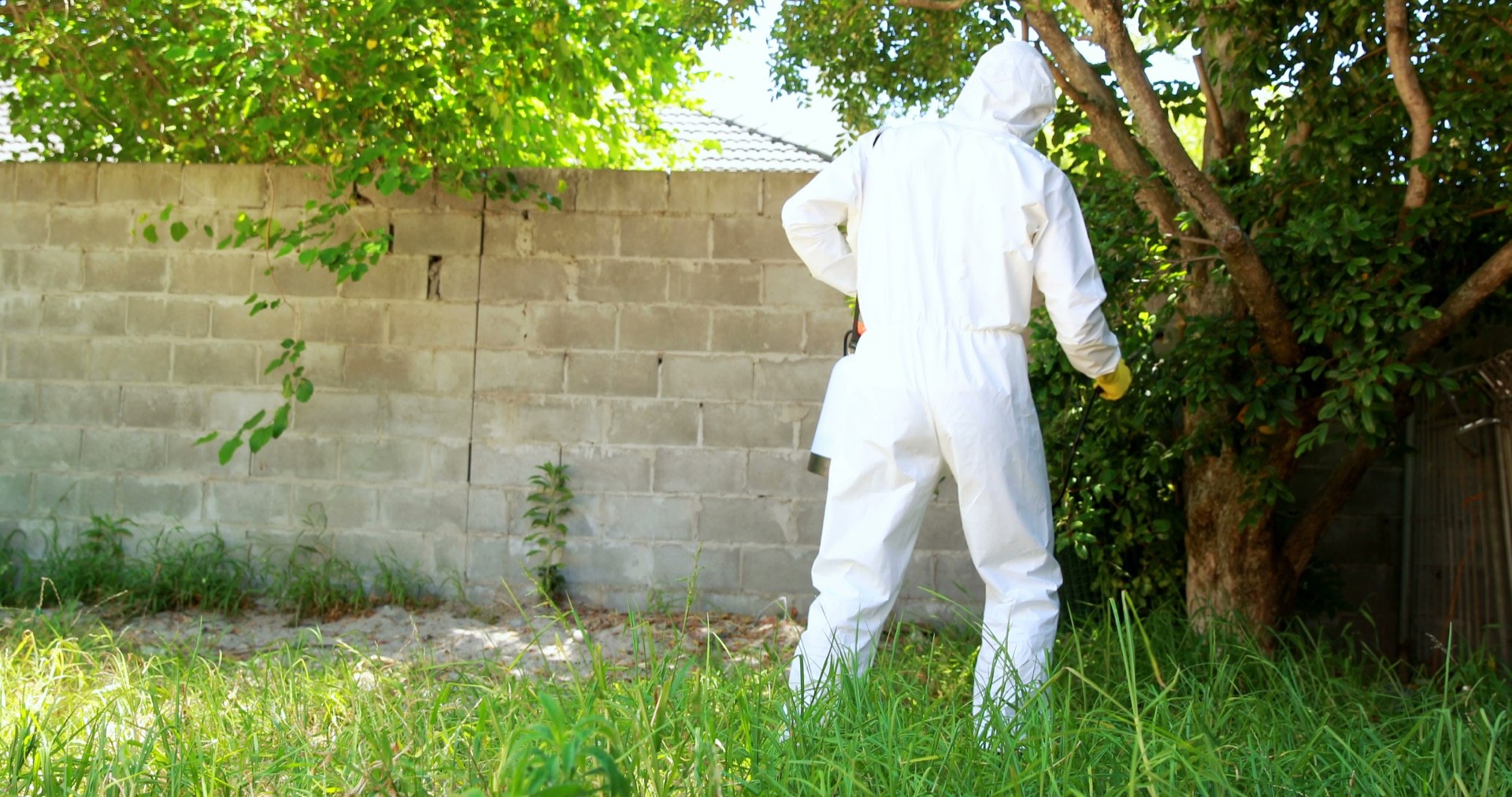
Common Pests in Hartville and Lake Township Homes, Season by Season

Pest pressure around Hartville and Lake Township follows the calendar closely. Termite swarmers appear indoors in spring, ticks and wasps own the summer, stink bugs cover the warm side of the house in September, and mice come in once the nights turn cold. Knowing which stretch you are in tells you what to go look at.
Why Do Hartville Homes See More Than City Homes Do?
Open ground, mostly. Hartville and the rest of Lake Township sit against farmland, tree lines and low wet spots, and all of that is habitat feeding into the houses at its edge. A home with a field behind it gets whatever the field has, and nobody treats the field.
The buildings matter too. Around here, century farmhouses with fieldstone foundations sit a few minutes from new construction on what used to be cropland, and they fail in different places. Older houses open up at the foundation line and around original trim. Newer ones let things in at utility penetrations, weep holes and garage door seals. Our Hartville pest control page covers how we work both.
Spring: Swarmers On The Windowsill
Eastern subterranean termites are the species Ohio actually deals with, and spring is when a mature colony releases winged reproductives. You rarely notice them outside. You notice them indoors, at a window or a light fixture, as a knot of winged insects or a scatter of dropped wings on the sill. The insects themselves disappear within the hour. The wings sit there for weeks, which is why people find the evidence and not the event.
It matters, because subterranean termites eat wood from the inside out, so a swarm indoors is often the first visible sign of a colony that has been working for years. Termite inspections are free, and termite control on something caught in April is a different job from one caught when a floor feels soft. Sentricon baiting takes out the colony including the queen without drilling or trenching around the house.
Ants wake up in the same weeks. A trail in the kitchen in April usually traces back to a nest outdoors rather than one in the wall.
Summer: Ticks In The Grass, Wasps In The Eaves
Summer out here is an outdoor problem more than an indoor one. Properties that back onto woods or unmowed ground pick up ticks, and the ones people miss are the immature stage, small enough to look like a freckle. Ticks wait on vegetation at the edge of cover, so the handoff happens where mown yard meets tall grass. Keeping the lawn short and leaving a gravel or mulch strip along that line takes most of the contact away.
Stinging insects build through the same months. Paper wasps take the eaves and the underside of deck rails, bald faced hornets build the grey football in a tree, and yellow jackets often go underground in an old rodent burrow, which is how people find them with a mower. By August and September a colony is at its largest and least patient. Nest removal is a job for someone with the right equipment once the nest is in a wall void, in the ground, or anywhere you would be standing on a ladder to reach it.
September And October: Everything Tries The Siding
This is where the calendar sits today. Brown marmorated stink bugs, boxelder bugs, western conifer seed bugs and multicolored Asian lady beetles all spend the winter as adults in sheltered spots, and houses qualify. According to Ohio State University Extension, brown marmorated stink bug adults begin flying to those overwintering sites in early September, with peak flight in late September or early October. They pile onto the warm south and west walls on a sunny afternoon and work their way in from there.
Ohio State University Extension describes boxelder bugs as half an inch to three quarters of an inch long, dark and flat backed, with three orange red stripes running lengthwise behind the head. None of them bite, breed indoors or damage the building. They are a numbers problem: the ones that get into a wall void in October wander into the living room on the first warm day in February.
The fix is mechanical and it has a deadline. Ohio State University Extension is direct about it: sealing the openings is the most effective thing a homeowner can do. Failed caulk around window and door frames, torn screens, worn door sweeps and unscreened vents are the usual routes. Do it before the flight peaks and you avoid most of the season. Do it in November and you have sealed them in. A quarterly plan such as State Shield Essential puts an exterior treatment on the building in this window on purpose, since four visits a year is what it takes to keep breaking the egg cycles.
Late Fall And Winter: The Mice Deadline
Nothing else on this calendar arrives as reliably as mice do once night temperatures drop. Houses that were quiet all summer get activity in the garage, along the basement rim joist and behind the kitchen cabinets inside the same two or three weeks. Fields being cut nearby will do it early.
Trapping alone resets the same problem every autumn, because the entry points are still open. A mouse gets through a gap the width of a dime, so exclusion means going around the building and closing the foundation cracks, utility penetrations, garage thresholds and roof line gaps, then controlling what is already inside. Waiting compounds quickly: the Ohio Department of Natural Resources says house mice produce several litters a year, at three to eleven young per litter, after a gestation of only eighteen to twenty one days. A pair in October is not a pair by January.
Barns, pole buildings and shops need the same work as the house, and usually first, since that is where the population lives before it moves. That is the thinking behind our rodent management work on outbuildings.
A Year Round Checklist For A Lake Township Property
- March to May: check window sills and light fixtures for shed wings. Watch for ant trails along the foundation.
- June to August: keep grass short and leaf litter cleared near the tree line. Check eaves, deck rails and the ground for nests before you mow or trim.
- Late August: recaulk window and door frames, replace torn screens and worn door sweeps, screen open vents. This is the window that matters most.
- September to October: expect stink bugs and boxelder bugs on the sunny walls. Vacuum the ones indoors rather than crushing them.
- October to November: seal rodent entry points around the foundation, utility lines, garage door and roof line, and do the outbuildings too.
- Any time: check secondhand furniture and guest room mattresses, since bed bugs arrive with luggage and used furniture rather than from the yard.
- Any time: keep firewood off the ground and mulch below the siding line.
Most households here end up on a recurring plan rather than calling about one pest at a time, because the list above rotates instead of ending. State Shield Essential covers ants, spiders, millipedes, centipedes, mice, rats, bees, wasps and seasonal invaders across four visits a year, and if pests come back between treatments, so do we, at no cost.
When To Stop Reading And Call Someone
Call on shed wings or mud tubes, on a nest you would need a ladder or a shovel to reach, on droppings in more than one room, and on anything you think might be a bed bug. Those four are the ones where waiting a week changes the size of the job.
State Termite has worked Stark County since 1933, and Hartville is one of the areas our crews are closest to. Termite and bed bug inspections are free. Tell us what you are seeing and roughly when it started, and we will tell you whether it needs a visit: schedule a free inspection or call 330-494-6199.
Frequently Asked Questions
What is the most common pest problem in Hartville homes?
Mice in autumn. Lake Township properties sit against fields and wooded edges, so rodents have somewhere to live all summer and a short trip indoors once night temperatures drop. Sealing entry points before that happens is the part that actually ends it.
I found wings on my windowsill in the spring. Is that termites?
It might be. Eastern subterranean termite swarmers drop their wings after the flight, so a pile of wings at a window or light is a classic sign of a colony in or under the structure. Carpenter ant swarmers look similar and mean something different, so have it identified. Termite inspections are free.
Do stink bugs and boxelder bugs damage a house?
No. Ohio State University Extension is clear that these fall invaders do not bite, do not breed indoors and do not damage the building. They are a nuisance in volume. The problem is that insects that get into a wall void in October keep wandering into living space on warm days all winter.
When is the best time to seal a house against fall invaders?
Late August into the first days of September, before the flight peaks. Ohio State University Extension puts peak brown marmorated stink bug flight to overwintering sites in late September or early October, so sealing before that keeps most of them out. Sealing after it traps the ones already inside.
Does a quarterly plan cover everything on this list?
Most of it. State Shield Essential covers ants, spiders, millipedes, centipedes, mice, rats, bees, wasps and seasonal invaders over four visits a year. Termites are not included in that plan and are handled separately through Sentricon monitoring or a liquid barrier, and bed bugs are their own treatment.