Mice In The Attic: What To Do Before You Touch The Insulation
Work the attic in this order: find the way in, trap until the trapping goes quiet, then clean. Federal rodent guidance is explicit that the animals come out first, and just as explicit that nobody sweeps or dry vacuums droppings. Whether the insulation stays is the last question, not the first one.
The order gets reversed almost every time, and it is easy to see why. You put your head through the hatch in late October, see what is up there, and the instinct is to clean it before anybody else looks. An older house in North Canton or Canton usually has more than one way in along the roof line, so cleaning first means doing it again in January.
Why Does The Order Matter So Much Up There?
Because an attic is a closed box full of still air, and the floor of it is material that holds everything a mouse leaves behind. The Centers for Disease Control and Prevention tells people to ventilate a closed building or a closed area inside a building by opening doors and windows for at least 30 minutes before any rodent work begins, and to leave the space while it airs out. The same guidance says not to vacuum or sweep rodent urine, droppings or contaminated surfaces until they have been disinfected, because dry methods put the dust in the air you are breathing.
What replaces sweeping is slower and duller. Spray the droppings and nests with disinfectant until they are wet, let it sit for at least five minutes, then pick the material up with paper towels and bag it. None of that is hard. It is just the opposite of what a shop vac is for, and it is the part people skip when they are already up there with a light in their teeth. If you want the health side of this laid out properly, we wrote it up under what mice can and cannot give you.
Trapping Comes First, And That Is Not A Preference
CDC puts it in one line: it is important to remove rodents from the premises first by trapping, and lethal spring or snap traps are the recommended type. Its trapping guidance names attics, basements and crawlspaces specifically as places to set traps, on the reasoning that these are the parts of a house with no regular human traffic through them.
The question that follows is how long. CDC treats a week with no captures and no new droppings, urine spots or gnawing as the sign the animals are gone, and says that fresh signs still appearing after a week can mean you are dealing with rats rather than mice. There is a second test built into the cleanup itself: droppings that turn up after you have cleaned mean something is still active up there. A clean attic is a measuring instrument. That only works if you clean it once and then look.
Where the traps go decides most of this, and an attic is an easy place to set a lot of traps badly. We covered placement, counts and the baits that actually get taken in where to put mouse traps.
How Did They Get To The Roof Line In The First Place?
Rarely by climbing the siding. The rodent-proof construction guidance by Baker, Bodman and Timm puts a house mouse through any opening larger than a quarter of an inch, and has it jumping as high as 18 inches from a floor onto an elevated surface. Those two numbers together describe something that walks a utility line, crosses a porch roof, and finds a gap that was always there. The University of Nebraska Lincoln Extension guide on structural rodent proofing calls that kind of construction work the first and most important step in reducing rodent damage, ahead of anything you put down to kill them.
| Where to look | What is usually wrong | What holds |
|---|---|---|
| Gable and roof vents | Original screen rusted through, or a mesh coarse enough to pass a young mouse | Quarter inch by quarter inch mesh in 24 gauge, fastened flat and overlapped past the opening |
| Soffit returns and the roof to wall junction | An open corner where the soffit dies into the wall, invisible from the ground | Sheet metal in 24 gauge or heavier, cut and fitted rather than stuffed |
| Chimney chase and flashing | A gap between the chase and the framing that nothing ever closed | Metal and a sealant, after somebody has actually looked inside the chase |
| Service penetrations at the eave | Cable, satellite and fan vents run through a hole bigger than the pipe | Metal collar or mesh behind the sealant, not sealant alone |
One caution about screening vents, because it is the mistake that creates a second problem. Attic vents are there to move air. The Department of Energy's Building America Solution Center notes that hardware cloth finer than half an inch by half an inch meaningfully cuts airflow, which is why screening is done with the right mesh fastened over the opening rather than by packing something into it. Our guide to mouse entry points starts at ground level, which is where most of them are. The roof line is the part people never think to walk.
What Does The Cleanup Actually Take?
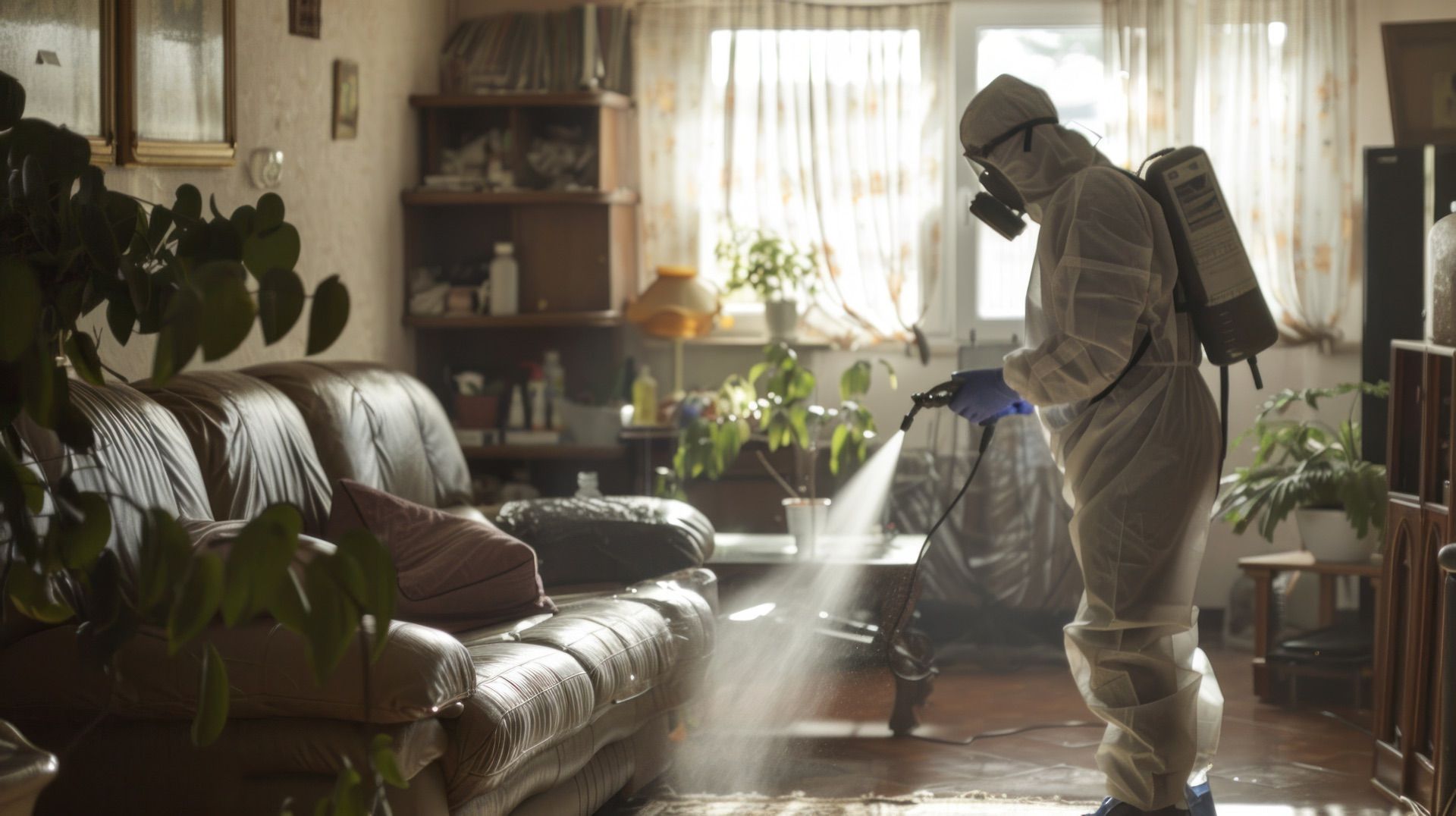
More than a dust mask, and this is the part of the job most worth reading before you commit to it yourself. For cleanup where there is a heavy infestation, CDC's updated recommendations for risk reduction list coveralls, disposable if possible, rubber boots or disposable shoe covers, rubber, latex, vinyl or nitrile gloves, protective goggles, and a respiratory protection device: a half mask air purifying respirator with a high efficiency particulate air filter, or a powered air purifying respirator with HEPA filters. The same guidance says to follow OSHA standards on fit testing before anybody uses one, and to decontaminate or dispose of the gear at the end of the day.
A few droppings along a joist is not that job. A floor of insulation you cannot kneel on without disturbing is closer to it, and an attic is the place where a light cleanup turns into a heavy one, because you are working on your hands and knees in the material itself with no way to ventilate properly. That is a fair reason to get the mice themselves handled first, by somebody whose rodent control work covers the exclusion and not only the traps, and to make the cleanup call after.
So Does The Insulation Have To Come Out?
Sometimes, and less often than the internet says. It is worth being straight about where the evidence ends: public health cleanup guidance is written around droppings, urine and nests, not around insulation as a material, so there is no federal line that says a given amount of mouse activity means a tear out. What decides it on an actual attic floor is how far the contamination runs, whether it is sitting on the surface of the material or has gone down into it, and whether anything is still living up there.
That last one is why the question belongs at the end. An attic emptied and refilled while mice are still coming in through the soffit is an expense that buys a season. Settle the way in, finish the trapping, then make the insulation decision once nothing is still living up there.
Five Things Not To Do In An Attic
- Do not sweep it or run a shop vac over it. CDC rules out dry methods on rodent urine, droppings and contaminated surfaces until they have been disinfected.
- Do not seal the roof line and call the job finished. Exclusion ends the supply of new mice. It does nothing about the ones already inside, which is what the traps are for.
- Do not put loose bait up there. An attic is the worst possible place to kill a mouse out of reach, and the smell that follows is its own separate job.
- Do not blow new insulation over the old. It hides the exact evidence the next inspection needs to read, including whether anything is still active.
- Do not go up without the right protection. Gloves and a real respirator, not a bandana, and air the space out for 30 minutes first.
If there is something in the attic of a house in North Canton or anywhere in Stark or Summit County, we will walk the outside and the roof line, set traps where they belong, and show you what the evidence up there is telling you. Get a free estimate through our request a quote page or call 330-494-6199.
Frequently Asked Questions
Can I vacuum mouse droppings out of attic insulation?
Not dry, and not before the attic has been aired out. CDC says not to vacuum or sweep rodent urine, droppings or contaminated surfaces until they have been disinfected, because dry methods stir the dust into the air. The sequence it gives is to ventilate the closed space by opening it up for at least 30 minutes and leaving during that time, then spray the droppings and nests with disinfectant until they are wet, let it sit at least five minutes, and pick the material up with paper towels.
Do I have to replace attic insulation after mice?
Not automatically. Federal cleanup guidance is written around droppings, urine and nests rather than around insulation, so there is no published rule that a given amount of activity means a tear out. In practice it comes down to how far the contamination runs, whether it is on the surface or has gone down into the material, and whether mice are still getting in. Settle the entry points and finish the trapping before anybody pulls insulation out, because an attic redone while the way in is still open gets redone again.
How long should I trap before I clean the attic?
Until the trapping goes quiet. CDC's guidance treats a week with no captures and no new droppings, urine spots or gnawing as the sign the rodents are gone, and notes that signs still appearing after a week can point to rats rather than mice. There is a second check after cleanup: droppings that show up on a cleaned surface mean something is still active, which is one reason to clean the attic once rather than in stages.
What kind of mask does a rodent cleanup need?
For a heavy infestation, more than a dust mask. CDC's updated recommendations for risk reduction call for a half mask air purifying respirator with a HEPA filter, or a powered air purifying respirator with HEPA filters, along with coveralls, rubber boots or shoe covers, gloves and goggles, and they direct people to follow OSHA standards on fit testing before using a respirator. A few droppings on a joist is a gloves and disinfectant job. An attic floor of nesting material is not.
Should I screen the attic vents before or after the trapping?
Screen the vents as part of the same job, but keep trapping inside while you do it, because sealing a roof line with mice already in the attic just locks them in. On materials, the rodent proofing guidance calls for quarter inch by quarter inch mesh in 24 gauge to exclude mice, and galvanized sheet metal of 24 gauge or heavier. Fasten it over the opening rather than packing the vent, since the Department of Energy's Building America Solution Center notes that finer mesh cuts the airflow the vent exists to provide.
Sources
- CDC, How to Clean Up After Rodents
- CDC, How to Trap Up to Remove Rodents
- CDC, Hantavirus Pulmonary Syndrome: Updated Recommendations for Risk Reduction (MMWR)
- Baker, Bodman and Timm, Rodent-Proof Construction (Internet Center for Wildlife Damage Management)
- University of Nebraska Lincoln Extension, Rodent-Proof Construction, Structural (G1530)
- Department of Energy, Building America Solution Center, Corrosion-Proof Rodent and Bird Vent Screens