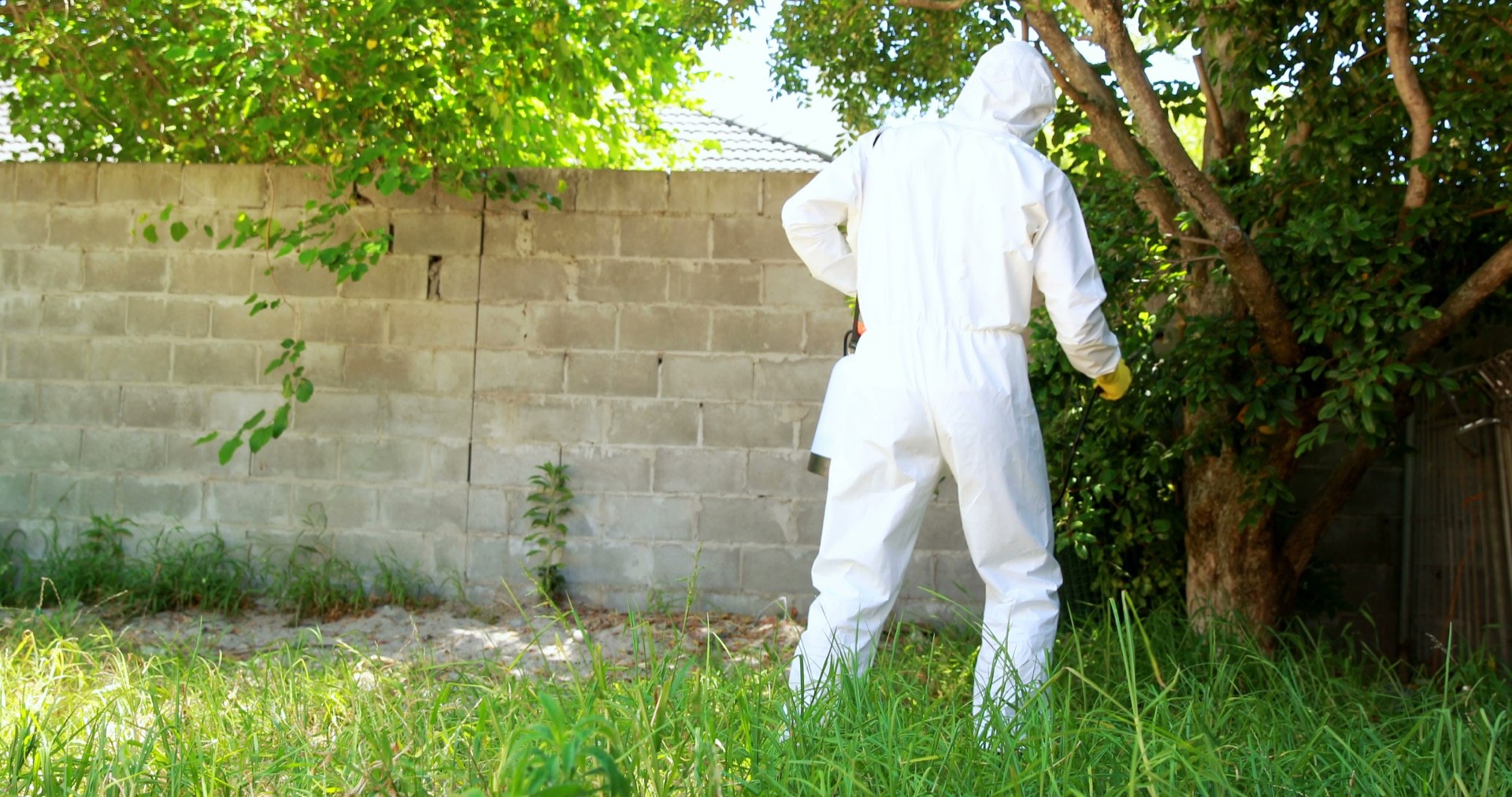
Pesticides In Ohio Schools: Who Has To Be Told, And When

Ohio allows pesticides inside a K-12 classroom building in three defined situations, requires the school to run a prior notification policy for any parent, student or employee who asks to be told in advance, and requires a named school employee to hold the records. It applies the same way whether a school employee or an outside company does the work.
What Rule 901:5-11-15 Covers
The rule sits at 901:5-11-15 in the Ohio Administrative Code, and the people who work under it call it Rule 15. Ohio State University's Pesticide Safety Education Program describes it as Ohio's rules for structural pesticide use inside the classroom buildings of schools, and for perimeter treatments, adopted to reduce the exposure risk to school children and staff.
Scope decides who has to care. Extension's fact sheet on pesticide use in schools, ANR-0155, ties the rule to Ohio's K-12 school chapters, Revised Code chapters 3311, 3314 and 3326 along with section 3301.16, which between them cover public districts, educational service centers, community schools, STEM schools and chartered nonpublic schools.
Two details settle most arguments about it. The requirements apply whether the pesticide is applied by a licensed school employee or by a contracted company, so no district moves the obligation off itself by doing the work in house. And disinfectants, sanitizers, germicides and antimicrobial agents are exempt from the notification requirements, which is why the sanitizer on a custodial cart sits outside the notification requirement while a residual insecticide does not.
Licensing is a separate hurdle in the same doorway. Extension's fact sheet on commercial applicator requirements, ANR-0140, lists schools among the sites where applying pesticides for hire requires a commercial applicator license, and the school fact sheet puts the work in category 10a or under the direct supervision of a licensed applicator. Our guide to checking an Ohio pest control license covers where to verify that.
When Can A Pesticide Be Applied In A Classroom Building?
Rule 15 approves no products and bans none. It describes three situations, built around the timing of the application, the type of product and how close children and staff are to it, and an application in a classroom building has to fit inside one of them.
| Situation | What it allows | What it costs you in practice |
|---|---|---|
| Around the school day | An application after the school day has ended, on a day school is not in session, or before the day begins with a gap of four hours or the minimum time on the product label, whichever is longer. | Four hours is a floor, not a target. A label asking for longer wins, which is what turns a routine treatment into an evening or a Friday job. |
| While school is in session | An application during the school day, provided people other than the applicators and necessary school staff are not scheduled to be in the treatment area during the work and for four hours or the label minimum afterward, whichever is longer. | The clock runs from the moment the application is finished, so a single classroom can be out of use well into the afternoon. |
| Specific contained products | Manufactured paste or gel baits, paraffin based rodent products placed in tamper resistant bait stations, termite baiting stations, and rodenticides placed in wall voids or other areas inaccessible to people and domestic animals. | Only when applied in strict accordance with the label. Bait squeezed into an open crack a child can reach is not this situation. |
The third row is the one that changes how a school building gets serviced, because everything in it can be done on a Tuesday morning with the building full. The first two rows buy flexibility on product choice and pay for it in calendar.
Who Has To Be Told, And Who Keeps The Paperwork?
Anyone who asks for it. Extension describes the required policy as one under which parents or guardians of minor children, adult students, faculty and staff enrolled or employed at the school may request and receive prior notification of scheduled service visits by a pesticide business, or of scheduled applications by a licensed school employee. The school picks the delivery method, and email or a list serve is explicitly workable.
The rest of the obligation is administrative, and it is the part that tends to go missing. Five things have to exist:
- A written prior notification policy. The policy itself is a requirement, separate from sending any individual notice.
- A named contact person. A school employee has to be designated for pesticide applications, so a request has somewhere to land.
- The application information. The contact person maintains the pesticide application details the notification requires.
- Proof the notices went out. Extension is specific that the contact person also keeps the documentation that prior notifications were sent to the people who requested them.
- One year of it. The school keeps that information for a year, which is long enough to outlast a staffing change.
There is an emergency path, and it is narrower than it sounds. Where special circumstances prevent prior notification, such as an emergency application against organisms that pose an immediate health threat, Extension describes the school as required to give notice as soon as possible and to explain why advance notice was not provided. The notice does not disappear. It moves to after the fact and arrives with a reason attached.
Why The Rule Quietly Points At Baits
Compare that third situation to what federal guidance already asks for and the overlap is hard to miss. The Environmental Protection Agency recommends integrated pest management in schools, calling it a smart, sensible and sustainable way to reduce pests and improve health, and it argues the health case in both directions: rodents, cockroaches and dust mites are often present in buildings and can cause or inflame serious allergic reactions and asthma attacks, so cutting exposure to the pests and to the pesticides is one job rather than two.
EPA gets concrete when it writes the contract language. Its bid and contract guidance for school IPM programs makes portable vacuum cleaners rather than pesticide sprays the standard method for an initial cockroach cleanout, and makes insecticide bait formulations, gel baits and containerized bait stations, the first choice for cockroach control.
That is the same toolkit Ohio lets a school use during the school day. A program leaning on monitors, baits, sanitation and sealing up entry points is the lower exposure option and also the one that survives a school calendar, because it does not need a room emptied for an afternoon every time somebody reports an ant. Our pest management for schools and campuses is built that way for the same reason.
A Bed Bug Found At School Is Not A School Infestation
A bed bug on a backpack produces an urgent phone call, and EPA's guidance for school administrators, teachers and staff is worth reading before that call rather than during it. It starts with how bed bugs get into a building at all: on personal belongings. EPA says plainly that finding a confirmed bed bug on a student or their belongings may not mean their home or the school is infested.
The handling advice is procedural and calm. Take the student discreetly to the school nurse so clothing and belongings can be inspected, let a school health professional manage the case, and isolate the belongings in a tight sealing container or a plastic bag in the nurse's office to reduce the chance of spread. On treatment, EPA points straight back at the rule: pesticides used in schools have to comply with state IPM and pesticide notification law, be applied only by appropriately licensed applicators, and be labeled for use against bed bugs and applied according to label directions.
What turns one sighting into information is monitoring over time, which is the point of a commercial bed bug monitoring program in a building where belongings arrive and leave every day. One interceptor catch tells you where to look next, and a quarter of empty interceptors tells a worried parent something worth putting in writing.
Does Any Of This Apply To A College Campus?
Not directly, and the reason is in the rule's own definition. Rule 15 is written for the classroom buildings of the K-12 schools named in those Revised Code chapters, so a residence hall, dining hall or lecture building at a university is outside its notification policy and its four hour window. What governs there is the product label, which is enforceable on its own, the licensing requirement for anyone applying pesticides to the property of another for hire, and whatever the institution has written into its own program and its housing agreements.
Borrowing the K-12 structure anyway is the easier path. A named contact, a notification list for residents who ask, records that outlast a staffing change and a bait first approach in occupied rooms are all defensible without a rule demanding them, and they are what a housing director needs the first time a resident asks what was applied in their room and when they can go back in.
State Termite has worked Northeast Ohio since 1933, and the institutional side of that work runs on documentation, because a school district or a housing office has to be able to produce it on request. If you want a building looked at before the next notice goes out, ask for a free estimate through our request a quote page or call 330-494-6199.
Frequently Asked Questions
Can a school in Ohio apply pesticides while students are in the building?
Yes, within limits. Ohio State University Extension describes Rule 901:5-11-15 as allowing an application while school is in session only if people other than the applicators and necessary school staff are not scheduled to be in the treatment area during the application and for four hours afterward, or the minimum time specified on the product label if that is longer, measured from the moment the application is completed.
How do I get notified before pesticides are used at my child's school?
Ask the school for its prior notification policy. The rule requires every covered Ohio school to have one, under which parents or guardians of minor children, adult students, faculty and staff may request and receive prior notice of scheduled applications and of scheduled service visits by a pesticide business, and to designate a school employee as the contact person. The school chooses how notices are delivered, and email or a list serve is acceptable.
Does the rule still apply if the school's own staff does the application?
Yes. Extension's fact sheet states the requirements apply whether the pesticide is applied by a licensed school employee or by a contracted company. The licensing side applies too: schools are listed among the sites where applying pesticides for hire requires a commercial applicator license, and the school fact sheet puts the work in category 10a or in the hands of a trained serviceperson under the direct supervision of a licensed applicator.
Are gel baits and bait stations treated differently than a spray?
They are the rule's third situation. Manufactured paste or gel baits, paraffin based rodent products in tamper resistant bait stations, termite baiting stations, and rodenticides placed in wall voids or other areas inaccessible to people and domestic animals may be used when applied in strict accordance with the label, without the timing restrictions attached to the other two situations. That is why a bait and monitoring program can run during a normal school day.
Does a bed bug found in a classroom mean the school is infested?
Not on its own. EPA's bed bug guidance for school administrators, teachers and staff explains that bed bugs are brought into buildings on personal belongings, and that a confirmed bed bug on a student or their belongings may not mean their home or the school is infested. EPA's recommended response is a discreet trip to the school nurse for inspection, with the belongings isolated in a tight sealing container or plastic bag while a school health professional manages the case.
Sources
- Ohio State University Extension, Pesticide Safety Education Program: Rule 15, Pesticide Use in Schools
- Ohio State University Extension, Pesticide Use in Schools (ANR-0155)
- Ohio Administrative Code, Rule 901:5-11-15, Pesticide use in schools
- Ohio State University Extension, Ohio Commercial Pesticide Applicator Requirements (ANR-0140)
- U.S. EPA, Introduction to Integrated Pest Management
- U.S. EPA, School Integrated Pest Management Program Bid and Contract Guidance
- U.S. EPA, Bed Bug Guidance for School Administrators, Teachers, and Staff