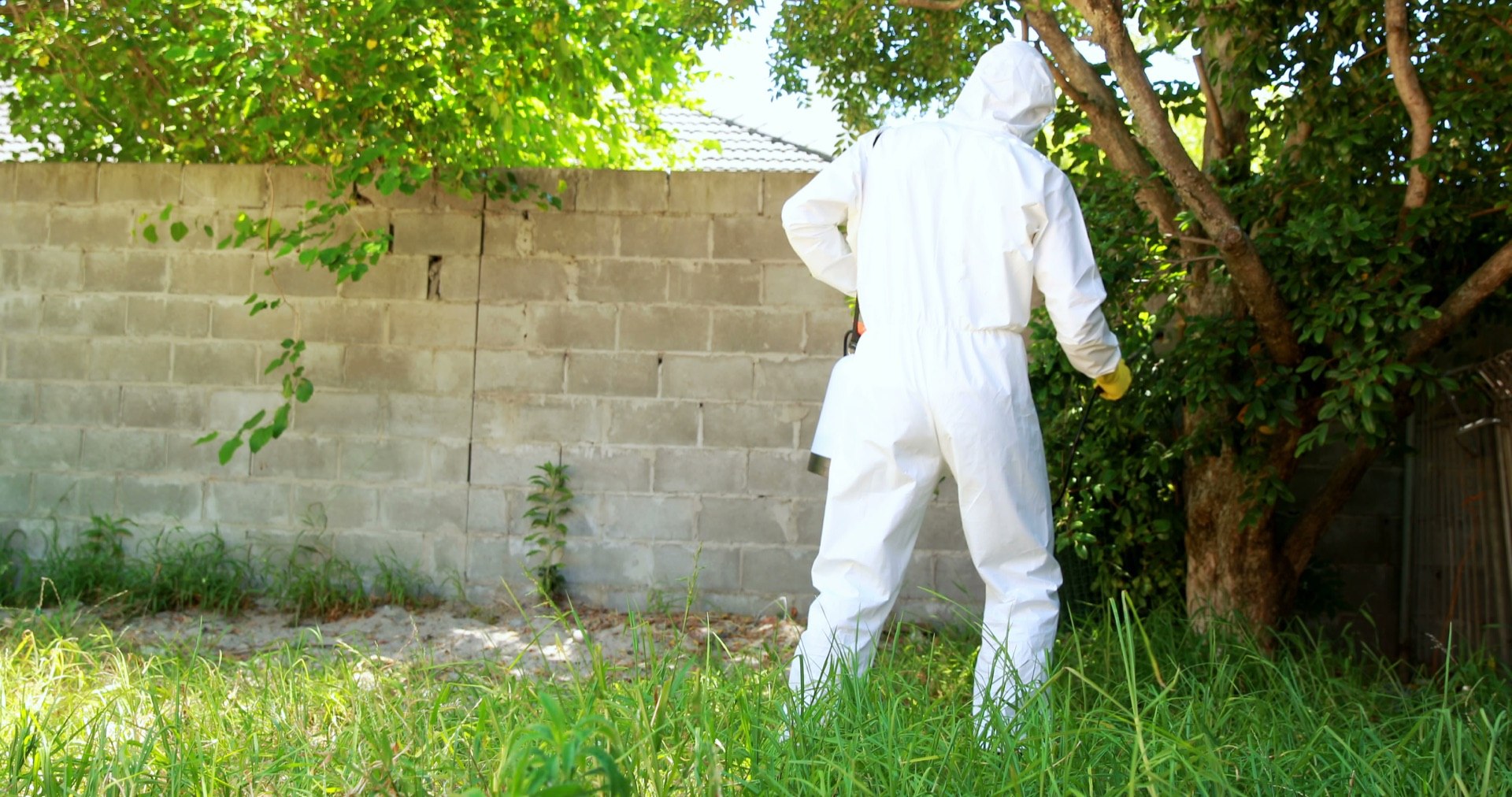
Pest Control On A Well And Septic Property: What Changes

A private well does not rule out pest control, and it does not rule out termite treatment either. What it changes is the ground outside. Ohio siting rules let a well sit as close as ten feet to a foundation, registered soil termiticide labels restrict what can be applied near one, and the method that fits the house gets decided at the inspection rather than in the truck.
Plenty of homes in our service area are on their own water. Head out past the edge of a water district in Lake Township, Marlboro, Osnaburg or the back roads around Canal Fulton and the wellhead is often a steel cap in the side yard a short walk from the kitchen window, with the septic field somewhere behind the garage. A lot of owners could not point to the water line between the two. That is the part worth fixing before anyone books a treatment.
Where Ohio Allows A Well To Sit
Start with the geometry, because it explains why this question comes up at all. Private water systems in Ohio are governed by the Ohio Administrative Code, and rule 3701-28-07 sets minimum isolation distances for a water source. These govern where a well may be placed, not what anyone may apply to soil, but they tell you how tight a country lot really is.
| From the well to | Minimum distance | Why it matters outside |
|---|---|---|
| Any component of a sewage treatment system | 50 feet | The tank and the leach field are both in that category, so a third of the back yard is spoken for |
| Any known or possible source of contamination | 50 feet (sanitary isolation radius) | The rule's catch-all, and the reason a technician asks before working near the cap |
| The foundation of a building or dwelling | 10 feet | A well can legally sit ten feet from the wall, which is exactly the strip where perimeter work happens |
| A leaching pit or drywell that was never properly abandoned | 100 feet | Older farm properties often have one nobody has thought about in thirty years |
| A lot line or easement | 10 feet | On a narrow lot the neighbor's well may be nearer to your foundation than your own |
That last row catches people out. The distances are measured from the water source, not from the property you happen to own, so the relevant well on treatment day is sometimes next door.
The One Treatment That Really Does Change
Interior work is interior work. A crack and crevice application in a kitchen, a bait placement under a sink, an attic inspection: none of that is affected by how you get your water. The treatment that changes is the one that goes into the soil against the foundation, which means termite control and, to a lesser degree, exterior perimeter work.
North Carolina State Extension states the position plainly: liquid termiticide labels and local building codes may prohibit or limit soil treatments when a well or cistern is located under a house or within a certain distance of it, and the Extension tells homeowners to request a copy of the actual label from the pest control company. Where some treatment is still allowed near a well, labels push the work toward a treated backfill method, which means soil is removed, treated away from the foundation and put back, rather than product being rodded or trenched into place where it sits. Extension describes that method as tedious and time consuming, which is a fair warning that it is a planned job rather than a quick pass around the house.
A crawl space counts as inside the structure for this purpose on some labels, so a cistern under an old farmhouse is not an outdoor detail. And the label is not advice. The U.S. EPA puts termiticide application in the hands of a trained pest management professional in most cases, because the products are applied under conditions the label sets out and many are highly toxic if those directions are ignored.
This is also why the method conversation matters on a well property. Baiting with the Sentricon system puts stations in the soil around the structure and eliminates the colony including the queen, with no drilling and no trenching. A liquid barrier is the other route. Which one fits a given house is what the inspection decides, and on a lot where the wellhead sits a few feet off the back wall, that decision is worth having out loud before anyone quotes the job.
What To Tell Your Technician Before Anyone Goes Outside
Nobody can see a buried water line, and a wellhead in tall grass behind a lilac is easy to walk past. Five minutes of pointing at things solves the whole problem.
- The wellhead itself. Walk out and put a hand on it. If it is buried in a pit or a vault, say so, because that changes how close is too close.
- The route of the water line. The pipe between the well and the house runs somewhere, usually in a straight line you can guess at. Where it enters near grade, say that too.
- Anything inside the foundation. A well, a cistern or a spring box inside the footprint of the house, including under a crawl space, is the single biggest factor in what can be done outside.
- The tank and the field. Lids, risers, the clean-out, and roughly where the laterals run. If the ground stays soft or green over one strip all summer, that is worth mentioning.
- Standing water and drainage. Sump discharge, foundation drains, a pond, a creek at the fence line. Labels care about runoff, and so does anyone applying anything at grade.
- History. Any treatment you know about, especially on a house that predates your ownership, and any well test you have had done.
Does Any Of This Reach The Septic System?
In normal use, no. A septic tank is a biological machine: it relies on naturally occurring bacteria to break down what arrives, and that population is robust against ordinary household volumes. The risk is concentration, not existence, and it comes almost entirely from what gets poured down a drain on purpose.
The EPA's SepticSmart guidance for homeowners is to keep oil based paints, solvents and large volumes of toxic cleaners out of the system, and to clear a clog with boiling water or a drain snake instead of chemicals. The same logic covers leftover pest products: a half can of anything does not belong down a sink, a floor drain or on the ground near the field. EPA also warns that tank additives can be ineffective or actively harm system operation and the environment, which is worth remembering the next time a product promises to fix a slow drain.
There is a pest angle that runs the other way, too. A failing line or a saturated field can show up indoors as small flies before it shows up anywhere else, and our guide to what is actually breeding those small flies explains how to tell which one you have.
What About A Treatment Done Before 1988?
It is a fair question on an older farmhouse, and it has a clean answer. Chlordane was the standard soil termiticide for decades, and from 1983 onward termite control in homes was its only approved use. The federal cancellation of its registration for commercial production, sale and use took effect on April 14, 1988, and the Agency for Toxic Substances and Disease Registry notes that the most likely source of exposure was living in a home that had been treated for termites.
So nothing applied to a house in Stark County since the spring of 1988 has been chlordane. If you know of a treatment before that and you want certainty about your water, well testing is the route, and your county health district is the place to start, since private water systems are permitted and inspected locally under the same rules that set the distances above.
Country Pressure Is Not Town Pressure
One more thing shows up on well and septic properties, and it has nothing to do with water. Houses with fields, woods or outbuildings around them get a different pest load than houses on a street: mice moving in off harvested ground, wasps in a pole barn, carpenter ants working from a stump line at the edge of the yard. Our season by season calendar for Hartville and Lake Township walks through the year, and the Hartville service page covers what we do out there.
On your own water in Stark, Summit, Portage, Wayne or Tuscarawas County? Tell us at the inspection and we will plan the termite or pest work around it. The inspection fee is waived when you go with us for treatment. Book a visit here or call 330-494-6199, and have a rough idea of where the well and the field are before we arrive.
Frequently Asked Questions
Is pest control safe to use if I have a private well?
Yes, with the outside of the house planned around the well. Interior work is unaffected by how you get your water. The treatments that need care are the ones applied to soil against the foundation, and the product label sets the rules for those. North Carolina State Extension notes that liquid termiticide labels and local codes may prohibit or limit soil treatment when a well or cistern sits under a house or within a certain distance of it, and that you can ask the company for a copy of the label.
Can a termite treatment be done if the well is right next to the house?
Usually, but the method may change. Ohio allows a well within ten feet of a foundation, so this comes up often. Labels push soil work near a well toward a treated backfill approach, where soil is removed, treated away from the foundation and replaced. Baiting is the other option: Sentricon stations go into the soil around the structure and eliminate the colony including the queen, with no drilling or trenching. The inspection decides which one fits the property.
Will pest control hurt my septic tank?
Not from a normal treatment. A septic tank works on naturally occurring bacteria, and the threat to them is concentration rather than ordinary use. EPA's SepticSmart guidance for homeowners is to keep solvents and large volumes of toxic cleaners out of the system and to clear clogs mechanically. The same goes for leftover pest products, which should never go down a drain or onto the ground near the leach field. EPA also cautions that tank additives can harm system operation.
How do I find out where my well and septic system actually are?
Start with your county health district. Private water systems and household sewage treatment systems in Ohio are permitted and inspected locally under the Ohio Administrative Code, so records of what was installed and where often exist even when the paperwork did not come with the house. On the ground, look for a steel or plastic cap in the yard, tank lids or risers, and a strip that stays greener or softer than the rest of the lawn over the laterals.
Sources
- Ohio Administrative Code 3701-28-07, Location, operation, and maintenance of private water systems
- North Carolina State Extension, Termites: Treatments Around Houses With Wells, Cisterns, or Foundation Drains
- U.S. EPA, Termites: How to Identify and Control Them
- U.S. EPA, SepticSmart homeowner guidance
- U.S. EPA, Septic Tank Additives fact sheet
- Agency for Toxic Substances and Disease Registry, ToxGuide for Chlordane