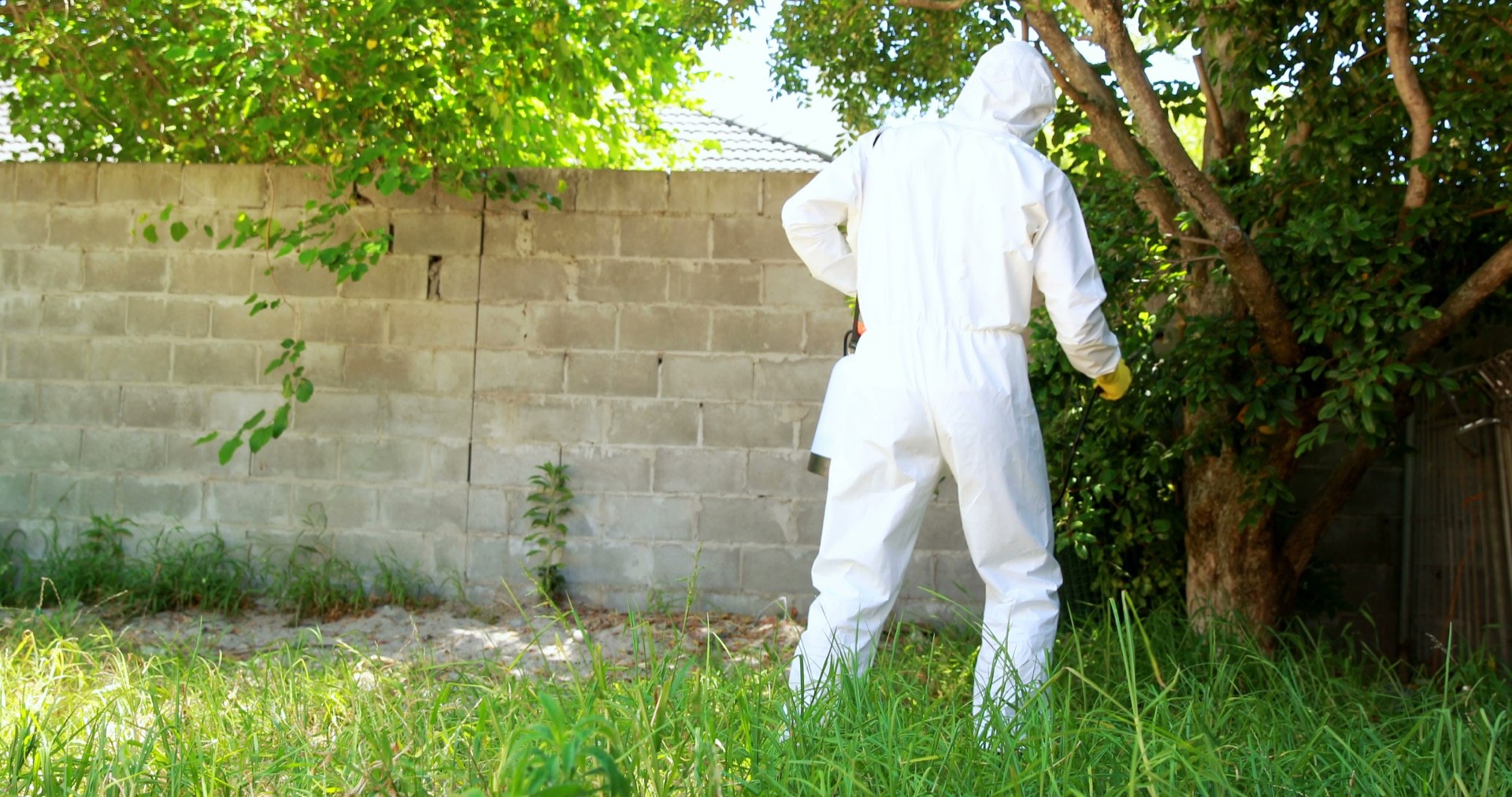
Rats And Mice In The Barn, The Coop And The Feed Room

Rodents show up in barns, coops and feed rooms in October because the fields they were living in are being cut. Ontario's Ministry of Agriculture, Food and Rural Affairs puts the route plainly in its guidance for livestock and poultry facilities: most rodents enter a barn directly from the surrounding fields, and the population builds from there. The feed is what keeps them.
Why Harvest Changes What Lives In Your Buildings
A standing field is habitat. It has cover, seed, and nothing walking through it most of the day. Then the combine goes through, and within a week the cover is gone and what is left on the ground gets picked over fast. The animals that were using that field have to move, and the nearest building with food in it is a short trip.
In Northeast Ohio that happens now. Ohio State University Extension's agronomic crops newsletter, writing about October corn harvest, notes that corn normally dries roughly a quarter to a half percent per day by late October into early November, and that waiting past early to mid November costs yield through stalk lodging, ear drop and ear rot. So the window when the fields around Hartville and Lake Township come down runs from about now into the middle of next month. The pressure on buildings follows it by days, not months.
This is a different problem from the one in a house. A house is sealed, heated and mostly free of food in the open. A barn has a feed room, a water line, hay, bedding and a door that stands open while you are working.
What A Livestock Building Supplies That A House Does Not
Mississippi State University Extension, in its publication on controlling rodents, names the house mouse, the Norway rat and the roof rat as the main rodent pests of poultry buildings, and gives the reason they do so well there: harborage, food and water in abundance. The same publication makes the useful point that populations stay low when one of those three is missing. On most animal properties all three are present by design, which is why the goal is to take away as much of each as the operation allows.
| Where | What it gives them | The change that matters |
|---|---|---|
| Feed room | Bagged grain, pellets, sweet feed, scratch, spillage in the corners. | Metal containers with lids that seat, and the floor swept rather than blown around. |
| Coop and run | Feeders left full overnight, scratch on the ground, eggs, bedding to nest in. | Feeders lifted or emptied at night, and hardware cloth rather than poultry netting. |
| Hay and straw stack | Deep, dry, undisturbed harborage with runways through it. | Stacked off the floor and away from walls so you can see behind and under it. |
| Water troughs and automatic waterers | Year round water, usually with a wet, sheltered spot underneath. | Fix drips and keep the ground under them clear enough to inspect. |
| Manure and compost | Warmth, cover and a soft place to dig. | Sited away from the buildings, turned rather than left to settle. |
| Tack room, shop and storage | Blankets, cardboard, insulation, birdseed, dog food. | Soft goods in bins, food in metal, cardboard off the floor. |
The Feed Bill Is The Part Nobody Adds Up
Clemson Cooperative Extension's manure management manual gives the figure for a single animal: one mouse eats about eight pounds of feed a year and can waste or contaminate roughly twice that much again. The waste is the larger number, and it is also the one that does not show up as a hole in a bag. It shows up as feed nobody can use.
Clemson frames control as three parts that have to run together, sanitation, rodent proof construction and population reduction, and warns that neglecting any one of them turns control into a permanent chore. Skip the construction and you are feeding new arrivals every fall. Skip the sanitation and the population you knock down rebuilds on the same feed.
For a sense of how normal this is on working properties, surveys cited in the Ontario guidance found rodent problems reported by 80 percent of poultry producers and 89 percent of swine producers. Nobody should read a mouse in the feed room as a verdict on their housekeeping. It is what a building full of grain attracts.
Mice Or Rats? Walk The Outside And Look For Burrows
The quickest way to tell which problem you have is to stop looking indoors. University of Missouri Extension describes the Norway rat as a stocky burrowing animal whose runways and burrows turn up next to buildings, along fences, and under low vegetation and debris. It adds a detail that makes inspection much easier: rats seldom travel farther than about 300 feet from their burrow for food or water. Find the burrow and the food source is within a short walk of it.
University of Nebraska-Lincoln Extension gives the size of what you are looking for, with den entrances about two to three inches across, often with extra escape openings dug nearby. Those extra holes are worth knowing about before you start counting, because a dozen openings along a foundation does not mean a dozen rats. Nebraska's advice on where to look matches Missouri's: debris piles, heavy vegetation and clutter.
Mice are a different search. They nest inside, in the hay, the bedding, the wall of the feed room, and they do not need much of an opening to get there. The Ontario guidance sets the practical thresholds at about a quarter inch for a mouse and half an inch for a rat, and lists the usual ways in on a farm building: cracks around door frames, gaps under doors, broken windows, water and utility hook ups, vents, and the holes around feed augers. Its note on materials is the one people learn the hard way, since rodents gnaw straight through plastic, wood and insulation, so repairs hold only when they are made with steel wool, hardware cloth or sheet metal. We went through that work building by building in our walkthrough of how mice get in and what actually seals them out.
Do Barn Cats Handle It?
Partly, and the extension research is more skeptical than barn tradition is. Virginia Cooperative Extension, writing about cats on hog farms, states that cats do not provide effective rodent control in the majority of cases, and notes that rodent colonies are found living in those buildings in close association with the cats. A cat eats some mice. It does not clear a building that is feeding hundreds.
UMass Extension's fact sheet on rodent control on farms, drawing on North Carolina State Extension material, is a little kinder and adds a catch worth knowing. Cats can hold down a low level mouse or rat population, but they can also carry rodents caught out in the fields into your buildings and introduce disease that way. Keep the cats if you like them. Just do not let them stand in for sealing the feed room.
What Moves The Number On A Working Property
- Get every feed into metal. Bags are a food source with a thin wrapper. Lids that actually seat are the detail that matters.
- Sweep up spills before you leave the building. A cup of grain behind a bin feeds a mouse for weeks.
- Clear a band around each building. Mowed short, nothing stacked against the wall, so a burrow has nowhere to hide and you can see the sill line.
- Empty or lift poultry feeders at dusk. Overnight is when the coop feeds rodents instead of birds.
- Close the openings with metal. Door sweeps, vent screens, and the gaps around augers, conduits and water lines.
- Watch your bait take and write it down. The Ontario guidance recommends record keeping on bait disappearance precisely because a rising take is the earliest warning that the population is growing.
That last point is where a property with animals on it usually needs more than a one time visit. Our rodent control and exclusion work is built around sealing the openings rather than only knocking down what is inside, and on a barn, a shop or an outbuilding that sits next to open ground, the sealing is what stops next October from looking like this one. Where there are animals, feed storage and a building that cannot simply be shut up tight, commercial rodent management is the version that runs on monitoring and documentation instead of a single treatment.
Placement is the part to hand off. Around livestock, poultry, barn cats and farm dogs, where material goes and how it is secured is the entire question, and it is why that work belongs with a licensed applicator rather than a trip to the farm store.
If the fields near you came down in the last two weeks and you are already seeing droppings in the feed room, that is the normal sequence and it is worth getting ahead of before winter sets the population indoors. We serve Hartville, Lake Township, North Canton and the rest of Stark and Summit County, and you can get a free estimate or call 330-494-6199.
Frequently Asked Questions
Will rodents in the barn end up in the house too?
Often, because the house is inside the same travel range. University of Missouri Extension notes that Norway rats seldom range farther than about 300 feet from their burrow for food or water, and a house, a barn and a feed room on one property usually sit well inside that. The Ontario Ministry of Agriculture guidance describes rodents entering buildings directly from surrounding fields, so treating only the house leaves the supply line open.
If I find several burrow holes along the barn foundation, does that mean several rats?
Not necessarily. University of Nebraska-Lincoln Extension describes Norway rat den entrances as roughly two to three inches across and notes that rats dig additional escape openings, so the number of holes overstates the number of animals. What the holes do tell you is where to concentrate: along foundations, fence lines and under debris and heavy vegetation, which is where Missouri Extension says the runways and burrows turn up.
Can cleaning up the feed alone solve it?
It helps more than anything else you can do without tools, but on its own it rarely finishes the job. Clemson Cooperative Extension describes rodent control as sanitation, rodent proof construction and population reduction working together, and warns that leaving any one of the three out makes control a constant effort. Mississippi State University Extension makes the same point from the other side: rodent populations stay low when harborage, food or water is missing, and a working barn tends to supply all three.
Is it worth treating a barn in late fall, or should I wait until spring?
Late fall is the point of it. The rodents moving in now are the ones that spend the winter breeding in a warm building with feed in it, so a population that is small in October is considerably larger by March. Sealing openings and removing food while the weather still allows outside work is also simply easier than doing it in January.
Sources
- Ontario Ministry of Agriculture, Food and Rural Affairs, Rodent Control in Livestock and Poultry Facilities
- Clemson Cooperative Extension, Confined Animal Manure Managers, Rats and Mice chapter
- Mississippi State University Extension, Controlling Rodents (P2824)
- University of Missouri Extension, Controlling Rats (G9446)
- University of Nebraska-Lincoln Extension, Rodent Control (G1737)
- Virginia Cooperative Extension, The Truth about Cats and Hog Farms
- UMass Extension, Rodent Control on Farms
- Ohio State University Extension, C.O.R.N. Newsletter: October Harvest Considerations for Corn Grain