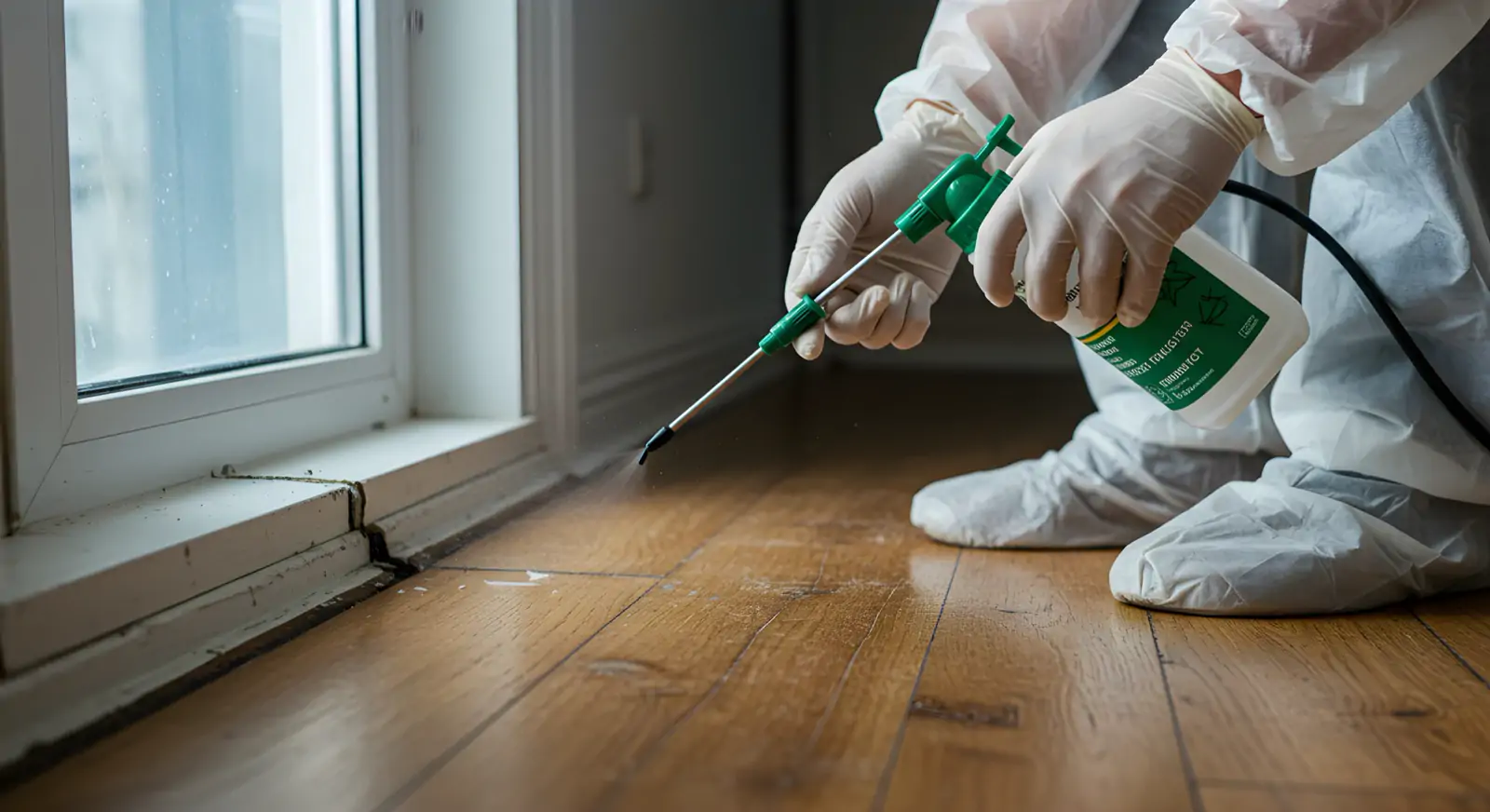
Water Damage And Pests: What Moves In After A Leak
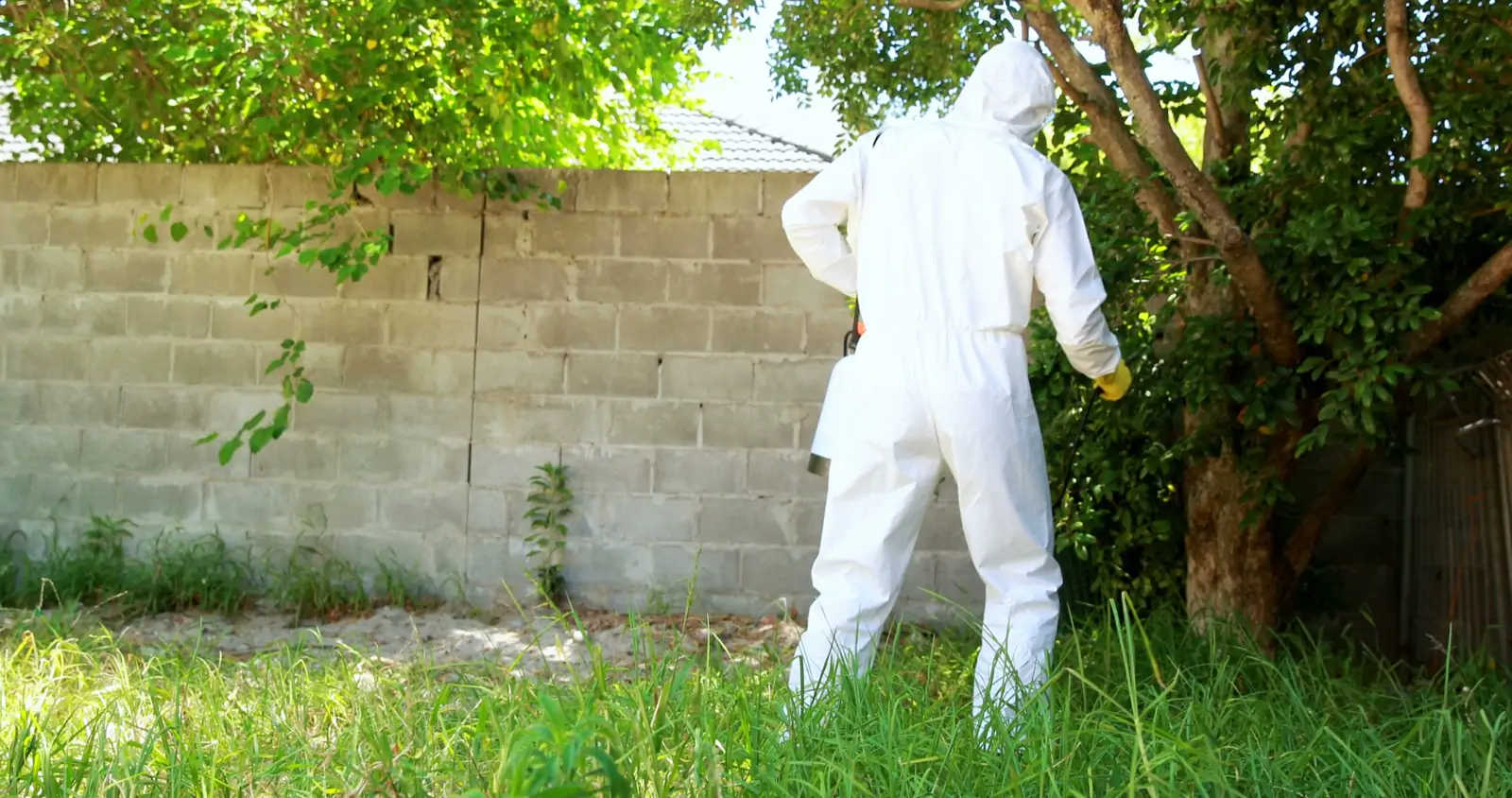
Water damage does not create pests. What it does is hand the insects already living around your house the two things they are usually short of indoors: steady moisture and building material soft enough to use. Whether that becomes a pest problem comes down to how quickly everything dries and what you leave sitting in the wet.
A supply line lets go in a Stark County basement, or February snowmelt finds a way under the shingles, and the drying gets all the attention. It should. But the weeks afterward are when something either moves in or does not, and most of what moves in is the ordinary crowd a quarterly pest plan already deals with.
What The Water Actually Hands Them
Humidity first. The EPA's guide to mold, moisture and your home says water damaged areas and items should be dried within 24 to 48 hours, and that indoor humidity belongs below 60 percent, ideally between 30 and 50. That number is a pest number too. Ohio State University Extension's fact sheet on silverfish and firebrats says silverfish live and develop in damp, cool places and prefer 75 to 95 percent relative humidity, which is why they turn up in basements, bathrooms and kitchens. A basement held near 45 percent is not somewhere they can build a population.
Food comes second, and it is usually paper. Cardboard, book bindings, wallpaper and the paste behind it are starch, and wet starch is easier to work with than dry. Soaked framing is the same story one size up: wood that stays wet gets softer, and softer wood is what a carpenter ant colony is looking for.
The First Two Days Decide Most Of It
Nothing on this list is pest control. It is all drying, and drying is the part that keeps the pest problem from starting.
- Stop the water, then confirm it stopped. A shut off valve that still weeps, or a downspout still dumping at the foundation, means everything below is a repeat performance.
- Take the wet paper out of the house. Boxes, stored documents, old newspaper under a basement shelf. Paper that dries in place stays warped, cool and attractive in a way that dry paper on a dry shelf is not.
- Open a wall that took water instead of waiting on it. Insulation in a closed cavity can hold moisture for weeks while the drywall face looks fine.
- Run the dehumidifier to a reading, not to a feeling. A hygrometer from the hardware store tells you whether you are under 60 percent, which the EPA guidance treats as the line.
- Write down what got wet, and where. If an insect shows up in March, the note is what connects it to the November leak.
- Hold off on treating anything while it is still wet. Conditions are doing the work at that point, and a product applied over a live leak is solving the wrong half.
Who Shows Up, And How Soon
The answer depends less on the amount of water than on what it soaked and how long that stayed damp.
| What got wet | What it tends to support | What ends it |
|---|---|---|
| Cardboard, stored paper, wallpaper | Silverfish and booklice, within weeks | The paper leaves, the humidity comes down |
| Drywall, trim and the void behind them | Silverfish, house centipedes, and in a kitchen or bath, cockroaches | Dry the cavity, then close the gap that let them reach it |
| Framing, sill plate or subfloor that stayed damp | Carpenter ants, over months rather than days, usually after decay has started | Replace the softened wood and find every water source feeding it |
| Soil at the foundation, a crawl space, a slab leak | Eastern subterranean termites, quietly and on their own schedule | Moisture correction plus a professional inspection and treatment |
| A floor drain or standing water nobody emptied | Drain flies breeding in the film, in about a week | Scrub the drain and keep water from standing, as in small flies in the house |
The top two rows are a nuisance that drying fixes. We went through what those insects are and are not in silverfish and earwigs in Ohio basements. The bottom three are structural, and they are the reason a leak is worth taking seriously long after the carpet is dry.
A Slow Leak Is A Different Problem From A Flood
A burst line soaks everything at once and then, if you dry it, it is over. A weeping toilet supply, an ice maker line behind a cabinet or a flashing detail that leaks only in a driving rain is the harder case, because it never dries and nobody sees it.
Carpenter ants are the insect that reads that difference best. Ohio State University Extension's fact sheet on carpenter ants says the parent nest is usually in damp, decayed wood whose moisture content is above 15 percent, and that leaks, condensation and rain are the usual reasons it got that way. The same sheet notes that workers forage as far as 100 feet from the nest, so the big black ants crossing a kitchen floor may be nowhere near the wet spot that is feeding them, and that the ants excavate wood rather than eat it. Our walkthrough of finding a carpenter ant nest covers how that search usually goes.
Termites use leaks the same way for a different reason. NC State Extension, writing on the biology and behavior of eastern subterranean termites, notes that a leaky pipe or standing water in a crawl space puts the moisture they depend on much closer to their food source. That is a conducive condition rather than a diagnosis, and it belongs in the hands of termite control rather than a dehumidifier. If the wood is already soft, the first question is whether anything is living in it at all, which is the subject of termite damage or wood rot.
The Northeast Ohio Version Arrives In Winter
Our leaks are seasonal. University of Minnesota Extension describes an ice dam as a ridge of ice at the edge of a roof that keeps melting snow from draining off, and says the water backing up behind it can get into the house and damage walls, ceilings and insulation, with mold and mildew following the moisture. Its guidance puts the blame on heat escaping into the attic through air leaks rather than on the weather alone.
For pests, the significant part is where that water lands. It wets the top plate, the insulation and the framing in an exterior wall, which is a part of the house nobody opens until something stains the ceiling. The same goes for a pipe that freezes in an unheated garage wall or over a crawl space: the damage is done in January and the evidence is a soft spot in March. If the house is going to sit empty over a cold stretch, the water side of that is worth planning for along with everything else.
When It Is Worth Having Somebody Look
Call somebody when the insects outlast the drying, when they are carpenter ants or termites rather than the paper crowd, or when the wood that got wet is holding up part of the house. An inspection after water damage is mostly a reading of conditions: where the moisture went, what it softened, and whether anything has found it yet.
If a leak in Canton, North Canton, Hartville or anywhere else in Stark and Summit County has left you watching the baseboards, we can take a look. Schedule an inspection or call 330-494-6199, and we will tell you plainly whether what you are seeing is a drying problem or a pest problem.
Frequently Asked Questions
Does water damage mean I am going to get termites?
No. Moisture is one of the things eastern subterranean termites need, not a summons. NC State Extension notes that a leaky pipe or standing water in a crawl space puts the moisture they depend on closer to their food, which raises the odds in a house that already has pressure around it. Fixing the water lowers those odds; it does not settle whether termites are present, and only an inspection does that.
How long after a leak would I see something?
It splits by pest. Silverfish, booklice and drain flies answer a damp spot in days to weeks, because they are already nearby and reproduce quickly. Carpenter ants and termites work on a scale of months to years, and they usually arrive after decay has already softened the wood, so a quiet spring says nothing about the following one.
The wall was repaired months ago and I am still seeing insects. Why?
Either the cavity never actually dried, or the repair covered a source that is still running. Insulation sealed up damp can stay damp for a long time, and a slow leak that only shows in heavy rain will keep feeding whatever found it. The useful next step is a moisture reading of the suspect area rather than another round of surface treatment.
Do I have to throw out boxes that got wet in the basement?
The wet ones, yes, and sooner rather than later. Cardboard holds water, holds its shape when it dries and gives silverfish and booklice both food and cover. Plastic totes with lids solve the same storage problem without any of that, which matters most in a basement that has flooded once already.
Sources
- EPA, A Brief Guide to Mold, Moisture and Your Home
- Ohio State University Extension, Silverfish and Firebrats (ENT-64)
- Ohio State University Extension, Carpenter Ants (HYG-2063)
- NC State Extension, Biology and Behavior of Eastern Subterranean Termites
- University of Minnesota Extension, Dealing with and preventing ice dams