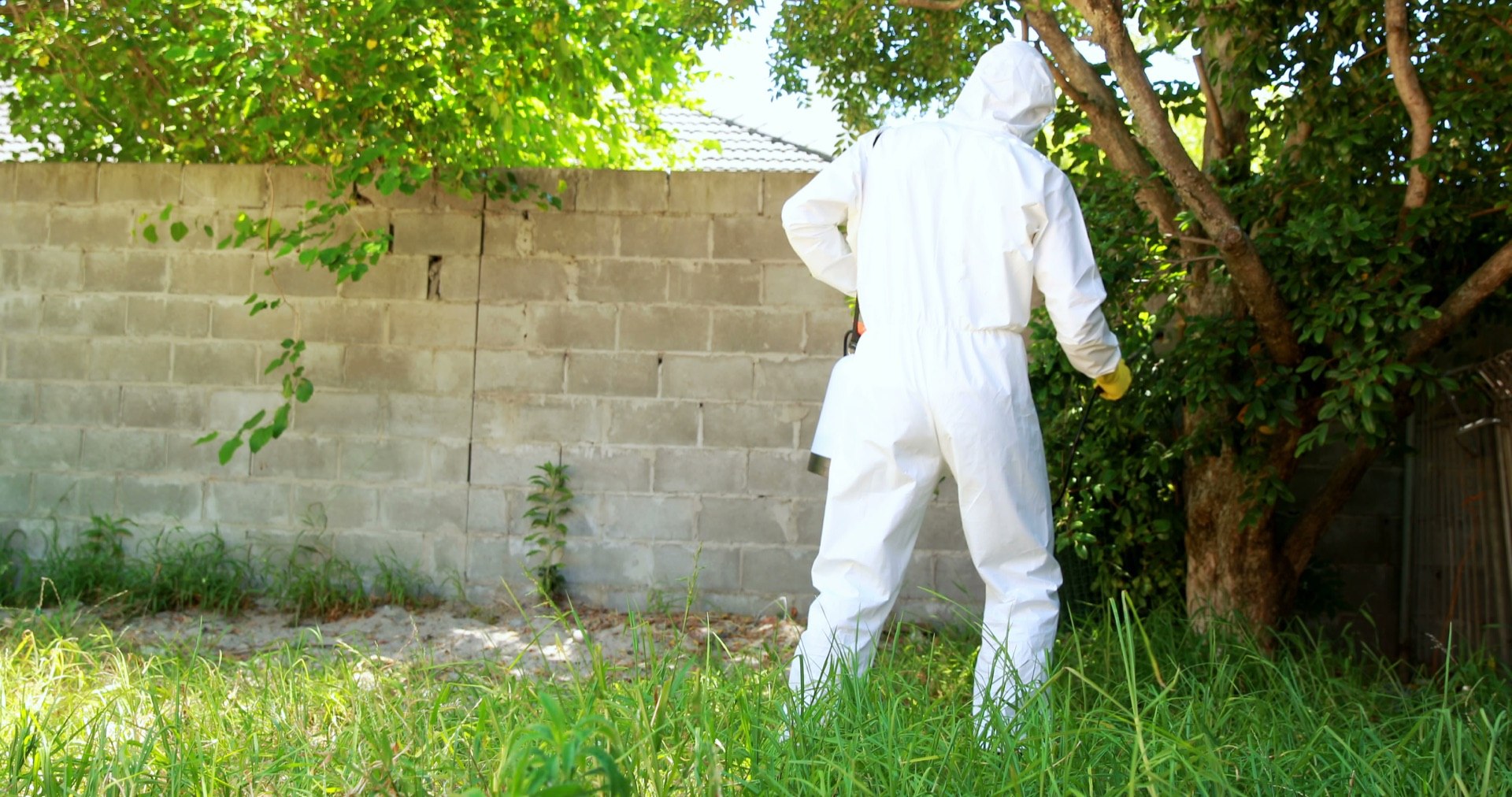
The Pest Problem Is Coming From Next Door. Now What?
Nobody can treat ground they do not control, so this splits in two. On your side, sealing the structure and working the perimeter decide how much gets in. On the other side of the line the lever is Ohio nuisance law, which lets a local board of health order a property owner to clean up. A signed complaint starts that.
The setting is usually familiar. A vacant house two doors down, a garage packed to the rafters, a back lot nobody has cut since June, bags of feed split open in an open-sided barn. By the time somebody looks up the law on it they have already done the obvious things at their own house, and the question they cannot answer is whether any of it holds while the source sits forty feet away.
Is It Actually Coming From Over There?
Worth settling first, because the answer changes what you do next. Signs that point off your property: burrow openings and worn runways along the fence line or under a shared shed, activity that thins out the farther you get from that side of the yard, droppings in an outbuilding with no nest or entry point you can find inside it, and a season that starts when something changes over there rather than when the weather turns.
Signs that point at your own structure are different. Droppings inside cabinets, noise in a wall or ceiling at night, a smell in one room, grease marks along a baseboard. That is a house with its own problem, and our guide to where mice actually get into an Ohio house is the better starting point.
Flying insects deserve a word of caution here, because people are confident about wasps in a way the biology does not support. Oregon State University Extension puts a yellowjacket's typical foraging radius at about 1,100 feet from the nest. Virginia Tech Extension goes further and notes that workers can fly a mile from the colony in search of food, which is why treating one nest in an area may not take every worker out of the picture. The yellowjackets at your picnic table could be nesting behind a tree line two streets over, not in the neighbor's eave.
What Work On Your Side Can And Cannot Reach
Exclusion is the part that does not care whose property the pest came from. A sealed structure is sealed against mice from a neglected lot, mice from a harvested field and mice from your own woodpile. That is the durable half of the answer, and it is the half you own outright: gaps at the garage door corners, utility penetrations, crawl space vents, the gap under a side door you only notice with the lights off.
A perimeter program is the other half. Rodent control and monitoring around the outside of a building intercepts what crosses the line, and it gives you a record of pressure over time, which matters if you end up filing anything. What it does not do is shrink the population next door. While food, water and harborage sit over there, the pressure keeps arriving. That is worth hearing straight: your side can be made hard to get into, and it will still not go quiet on its own while the source is untouched.
One thing not to do: put traps, bait or anything else on a property you do not control. Products go where the label allows and where the person responsible for that ground agrees to it. Keep your own stations on your own side, out of reach of children and pets, and read our notes on where a trap line actually belongs before you set anything.
Who Has The Authority In Ohio
This is the part most homeowners do not know exists. Ohio Revised Code section 3707.01 says the board of health of a city or general health district shall abate and remove all nuisances within its jurisdiction. It may, by order, compel the owners, agents, assignees, occupants or tenants of any lot, property, building or structure to abate and remove a nuisance, and it may prosecute anyone who refuses to obey that order.
There is a second half with teeth. If the owner does not act, the board's officers and employees may remove or abate the nuisance themselves and certify the cost to the county auditor, where it is assessed against the property as a lien. The rest of chapter 3707 covers what happens when an order is ignored, including citation and injunctive relief. None of that is quick, and none of it is a pest control company's to drive. It is the public route, and it exists.
Where The Complaint Goes, By Where The Property Sits
Jurisdiction is the thing people get wrong. A complaint filed with the wrong office does not get forwarded, it gets closed. Where the property sits decides who looks at it.
| Where the property is | Who investigates | What they say about it |
|---|---|---|
| Stark County | Stark County Health Department, environmental health | Mice, rats and rodent infestation are named on its complaint list, along with open dumping of solid waste. It asks for your name and contact information or it cannot follow up |
| A Stark County township, Canton Township for example | Township zoning for the debris, the county health department for the pests | Zoning handles accumulations of debris, refuse and tires in open areas. Health, septic and rodent complaints are referred to the health department, and anonymous complaints are not prioritized |
| Summit County outside Akron | Summit County Public Health | It responds to interior and exterior housing complaints including trash accumulation, water infiltration and pest infestations, in the communities surrounding the city |
| Inside the City of Akron | The city's own housing compliance division | Summit County Public Health sends Akron addresses to the city rather than handling them itself |
| Portage County | Portage County Health District | Rat and rodent infestations are investigated as public health nuisances, and complaints generally have to come in writing on a signed form with contact information |
Two patterns run through all of it. Cities with their own housing or health programs keep their own addresses, so check the municipal boundary before you call anyone. And every one of these offices wants a name attached. Anonymous reports get investigated when time allows, which in practice means they sit.
What To Have Written Down Before You File
An inspector arrives at a strange address and has to find, on one visit, what you have been watching for weeks. Give them the shortcut.
- Dates and what you saw. Not an impression. Five dated entries saying what, where and roughly when in the day beat a paragraph saying it has been going on all year.
- Exact locations. Burrow mouths along the fence, the hole under the shed slab, the split bag of seed on the open porch, the pile that has not moved since spring.
- Photos from your own property. Stand on your side of the line and shoot across it. Do not go over there, and do not go through anything.
- What you have already done. Sealing work, trap counts, service dates from your own company. It shows the problem is not originating with you, which is the first thing anyone will wonder.
- The address and whether it is rented. The statute reaches owners, agents, occupants and tenants, so the office needs to know who it is dealing with.
- Your name and contact information. Every department above asks for it, and a complaint without it goes nowhere.
The Cases That Are Not A Neighbor Problem At All
Several versions of this turn out to be something else once you look at the building.
- A shared wall. In a duplex, an apartment or a row of townhomes, one unit was never the whole job. That is a building-wide treatment and a landlord conversation, covered in our guide to pest control in Ohio rentals.
- A condominium. The declaration decides where the association's responsibility stops and yours starts, usually before the statute matters at all. We walk through that in who pays for pest control in an Ohio condo.
- Termites next door. A swarm at the neighbor's house is not something anybody abates on their lot, because the colony is in the ground between you. Read what a neighbor's termites mean for your house instead.
- Somebody feeding. Bird feeders and bowls left out for strays support rodents without anybody intending it, and that is a conversation rather than a complaint. Our piece on feeders and mice has the distances and the storage fixes.
- A nest on their structure. A wasp or hornet nest in their soffit is theirs to have handled. We do wasp and hornet removal where the person responsible for the property asks us to, and not otherwise.
If the pressure is real, start with the part you control. We will inspect your house, seal what is open and set up monitoring so you can see whether what you are doing is holding, and we work Stark, Summit, Portage, Wayne and Tuscarawas counties, including North Canton. Book an inspection here or call 330-494-6199, and tell us what you have seen on the other side of the fence. It changes where we look.
Frequently Asked Questions
My neighbor has rats. Can I make them do something about it?
Not directly, but Ohio law puts that power somewhere specific. Revised Code section 3707.01 says the board of health of a city or general health district shall abate and remove nuisances in its jurisdiction, and may order the owners, agents, occupants or tenants of a property to abate one, with prosecution available if the order is ignored. If the owner still does not act, the board can abate it and have the cost assessed against the property. Your part is a signed complaint with the address and what you have seen.
Can I set traps or put bait on the neighbor's side of the fence?
No. Anything you place goes on ground you control, with the agreement of whoever is responsible for it, and any product goes only where its label allows that use. Keep traps and stations on your own property and out of reach of children and pets. Crossing the line to treat somebody else's lot creates a second problem on top of the one you called about.
Who do I call about a neglected property with rodents in Stark County?
The Stark County Health Department's environmental health program, which lists mice, rats and rodent infestation among the complaints it investigates, along with open dumping of solid waste. In a township such as Canton Township, debris, refuse and tires in open areas are a zoning matter while the rodent side gets referred to the county. Give your name either way: the departments say anonymous complaints are not followed up or not prioritized.
Will treating my house work if the source is next door?
It works on the part you control, which is more than most people expect. Sealing the structure holds regardless of where the mice started, and exterior monitoring intercepts what crosses. What it cannot do is reduce the population on the other property, so while the food and harborage sit there you should expect continued pressure and plan for the long version rather than a one visit fix.
The yellowjackets are coming from the neighbor's yard. Can you treat the nest?
Only if the person responsible for that property asks us to. It is also worth confirming the nest is where you think it is. Oregon State University Extension puts typical yellowjacket foraging within about 1,100 feet of the nest site, and Virginia Tech Extension notes workers can fly a mile from the colony looking for food, which is why treating one nest in an area does not always clear the workers out of a yard.
Sources
- Ohio Revised Code 3707.01, Powers of board - abatement of nuisances
- Ohio Revised Code Chapter 3707, Board of Health
- Stark County Health Department, Complaints and Nuisances
- Canton Township, Ohio, Zoning and Nuisance Complaints
- Summit County Public Health, Healthy Homes complaints
- Portage County Health District, Nuisance Abatement and Complaints
- Oregon State University Extension EM 9211, Protecting Honey Bees from Yellowjacket Wasps
- Virginia Cooperative Extension ENTO-615, Yellowjackets