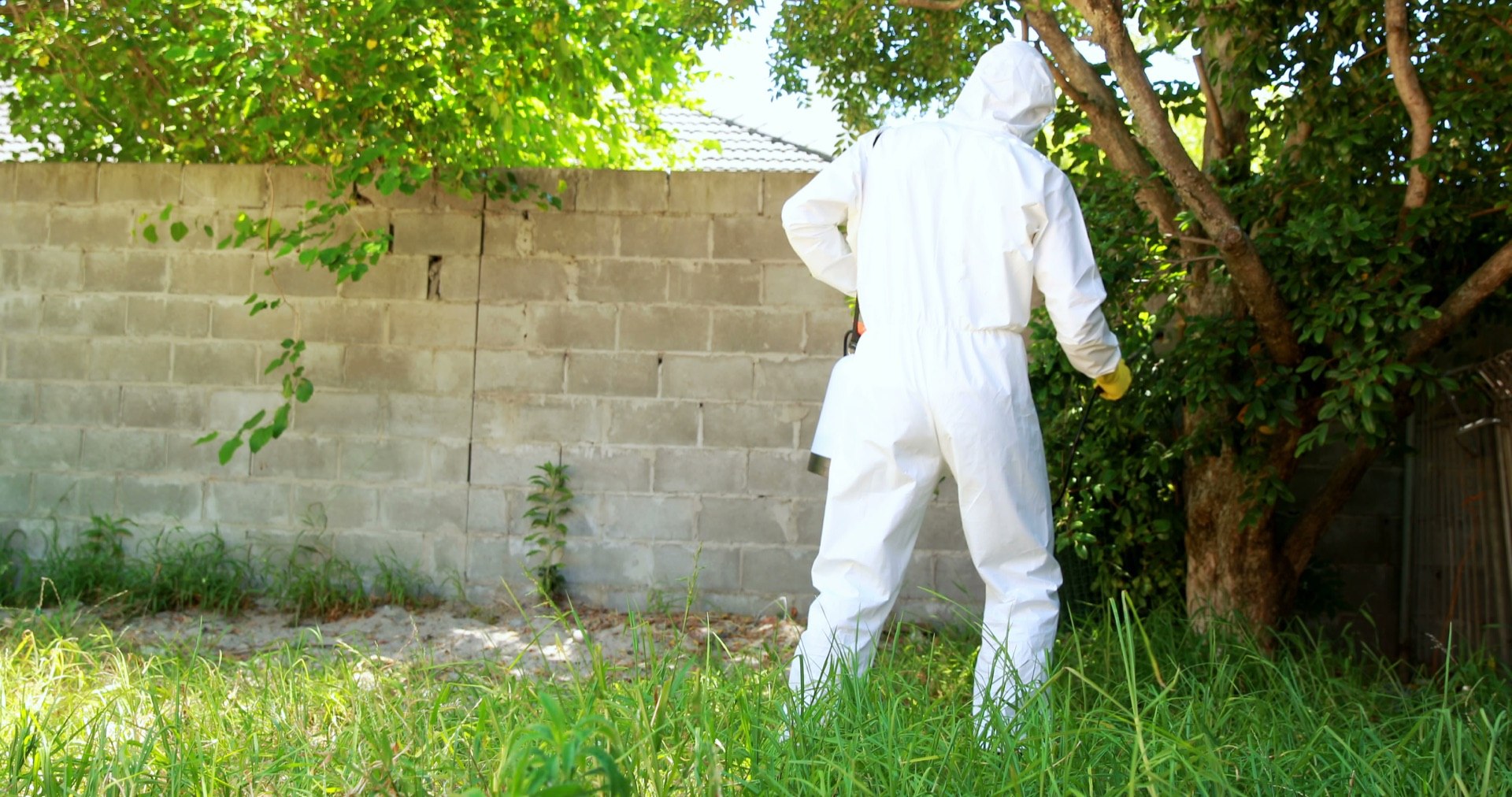
Is Pest Control Safe During Pregnancy?

There is no blanket yes or no. The National Pesticide Information Center says every pesticide carries some level of toxicity and some risk during pregnancy, and that a baby's developing brain and nervous system can be more sensitive to it. What moves the exposure up or down is the method, where the material is placed, who applies it, and how long the house airs out before anyone goes back in.
Most people ask this with a live problem in front of them. Mice in the kitchen in November. Ants that came back. A roach somebody saw downstairs. None of the published guidance tells a household to live with the pest, because the pest carries its own risks. It tells you to bring the exposure down while you deal with it, which is a different instruction and a much more useful one. Our State Shield Essential plan gets built around that when the office hears somebody in the house is pregnant.
What Does The Published Guidance Actually Say?
Three sources sit at slightly different places, and reading all three is more honest than quoting one. The National Pesticide Information Center states that all pesticides have some level of toxicity and pose some risk during pregnancy, and that the developing brain and nervous system can be more sensitive to their toxic effects. The National Institute for Occupational Safety and Health is blunter about the limits of the evidence: it says we do not know what levels of exposure to pesticides are safe for pregnancy and breastfeeding, and advises avoiding applying pesticides directly, asking someone else to do it instead.
MotherToBaby, the teratogen information service whose fact sheets are published on the National Institutes of Health bookshelf, puts the professional case in context: it says it is unlikely that having your home or workplace treated by a professional exterminator will result in a high enough exposure to increase risks to a pregnancy. Taken together, that is neither a green light nor a reason to cancel. It is a reason to care about how the work is done.
The Pest Is Also A Health Question
Rodents are the clearest example, and November is when they turn up in Northeast Ohio houses. The CDC advises that women who are pregnant or planning a pregnancy avoid contact with wild or pet rodents and their droppings whenever possible, because lymphocytic choriomeningitis virus spreads through rodent urine, droppings, saliva, blood and nesting material, including dust raised while sweeping droppings up. The CDC puts the overall risk as low, and is equally clear about the stakes: an infection during pregnancy can reach the baby, and can end the pregnancy. There is no specific treatment, and a blood test can tell you whether there has been an infection.
The practical reading of that is narrow and useful. The cleanup is the exposure, so the person who vacuums an attic or sweeps a cupboard of droppings should be somebody else, which is one reason rodent control is worth handing over whole rather than half. We went through the broader rodent health picture in what mice can actually give you, and the structural half of the job, the gaps that let them in, in how mice get into an Ohio house.
Which Parts Of A Job Put Anything In The Air?
Not all of it, and that is the part worth knowing before the visit. A plan is a set of separate decisions, and most of them involve no spray at all.
| The approach | Where the material ends up | What that means for exposure |
|---|---|---|
| Exclusion and sealing | Nothing is applied. Gaps get closed, down to the ones a mouse uses at about the width of a dime | The permanent half of rodent work, and the half with no product in it |
| Traps and monitors | Mechanical devices on floors, in voids, under furniture | Catches and confirms. The removal of what they catch is the job to hand off |
| Bait inside a station | Sealed in a housing, placed where a child or a pet cannot reach into it | Nothing on a surface anyone touches, and nothing airborne |
| Crack and crevice placement | Into the void where the insects travel, rather than across an open floor | Targeted. It is also what works, because that is where the pests are |
| Heat for bed bugs | Temperature, not chemistry. Our ThermaLock work leaves no chemical residue | The room comes back to normal once it cools, with nothing to dry or wear off |
| Exterior perimeter work | Outside the living space, on the band where insects cross in | The EPA advises against outdoor sprays on windy or rainy days, which is a scheduling question |
Bed bugs are the clearest case of a job that can be done on heat alone, and our bed bug heat treatment is built that way. The EPA puts the general order plainly in its guidance for homeowners: before considering chemical controls, take away what pests need, which is food, water and shelter, and fix the leaking plumbing rather than treating around it. The same guidance warns that routine applications in and around a home are not a good idea unless there is a constant infestation and non-chemical methods have failed. That is a fair standard to hold us to.
Timing, Airing Out And Who Is In The Room
For anyone who does use a pesticide while pregnant, the National Pesticide Information Center gives four steps: pick the least toxic option that will control the pest, have another person apply it and leave the area, give the home time to air out and let the product dry before going back in, and call NPIC about the reproductive toxicity of a specific product. Its episode on this question adds the same rule for a baby already in the house: keep them out of the treated area until the product is completely dry and the room is well ventilated.
On our side, the customer usually does not need to be home at all unless we need interior access, which makes the whole question easier to manage. How long before re-entry depends on the product and the label, and we went through what drives that in how long you have to stay out after a treatment. The label is also where the word safe is not allowed to appear, which trips people up every time; what pet safe pest control actually means unpacks that rule.
What To Say When You Call
Say it on the first call, before anything is scheduled. It changes the recommendation, not just the paperwork, and nobody here needs a reason beyond the sentence itself.
- Tell the office who is in the house: a pregnancy, an infant on the floor, anyone with asthma, pets and where they sleep.
- Ask what the non-chemical part of the plan is, and whether exclusion, traps or heat can carry more of the work.
- Ask what would be applied, where it goes, and whether any of it lands on a surface someone touches.
- Ask how long before re-entry, and what the label requires rather than what a rule of thumb says.
- Ask for the product label in writing if you want to look anything up, or to hand to a clinician.
- Hand off the cleanup. Droppings, nesting material and dead insects are the part worth giving to somebody else.
The Questions That Belong To A Clinician
We are a pest control company, so the line is easy to draw. Whether a particular exposure matters for a particular pregnancy is a question for a doctor or midwife, and worth raising at an ordinary appointment rather than saving for an emergency. For product specific questions, the National Pesticide Information Center answers them directly, including questions about reproductive toxicity. For anyone who handles pesticides at work, the National Institute for Occupational Safety and Health suggests talking with the employer about moving off those duties during pregnancy and breastfeeding, and reducing exposure as far as possible where that is not an option.
If something in your house needs dealing with and the timing is not ideal, that is the normal case rather than a complication. Schedule an inspection or call 330-494-6199, tell us what is going on, and we will build the plan around it. State Termite has worked Stark, Summit, Portage, Wayne and Tuscarawas counties since 1933, and if pests come back between treatments, so do we, at no cost.
Frequently Asked Questions
Do I have to leave the house during a pest control treatment if I am pregnant?
The National Pesticide Information Center advises having someone else apply the product and leaving the area, then letting the home air out and the product dry before going back in. In practice, most of our visits do not need the customer home at all unless we need interior access, so the simplest version is to be out and let the rooms ventilate before you return.
Is a bed bug heat treatment different from a chemical one here?
It is a different mechanism. ThermaLock heat kills every life stage including eggs, usually in a single day, and leaves no chemical residue behind, so there is nothing to dry or wear off before the room is used again. It does require preparation, which the office walks through before anything is scheduled. The inspection fee is waived when you go with us for treatment.
Is it safer to just handle it myself with something from the hardware store?
That is usually the higher exposure option, not the lower one. NPIC's guidance is to have another person apply any pesticide and leave the area, and the EPA warns against using more product than the label directs and recommends ready to use products over anything that needs mixing. A fogger is the clearest example of the problem: it puts material across a whole room rather than where the pests actually are.
Should I just wait and deal with the pests after the baby arrives?
Waiting has its own cost, which is why the guidance is about method rather than delay. The CDC advises pregnant women to avoid contact with rodents and their droppings whenever possible, and sweeping up droppings is one of the ways lymphocytic choriomeningitis virus spreads. Starting with the non-chemical work the EPA puts first, which is removing food, water and shelter and sealing the building, moves things forward without putting anything in the air.
Who can answer a question about one specific product?
The National Pesticide Information Center takes questions about specific pesticides, including reproductive toxicity, and MotherToBaby publishes plain language fact sheets on exposures in pregnancy. Anything about your own pregnancy belongs with your doctor or midwife. We can give you the label for whatever we would use so the conversation starts from the actual product.
Sources
- National Pesticide Information Center, Pesticides and Pregnancy
- National Pesticide Information Center, PestiBytes Episode 8: With a Baby on the Way
- CDC NIOSH, About Pesticides and Reproductive Health
- MotherToBaby, Pesticides (NIH Bookshelf)
- CDC, Lymphocytic Choriomeningitis Virus (LCMV) and Pregnancy: Facts and Prevention
- US EPA, Do's and Don'ts of Pest Control
- US EPA, Citizen's Guide to Pest Control and Pesticide Safety