Plant Shutdown Pest Control: What To Do While The Lines Are Down
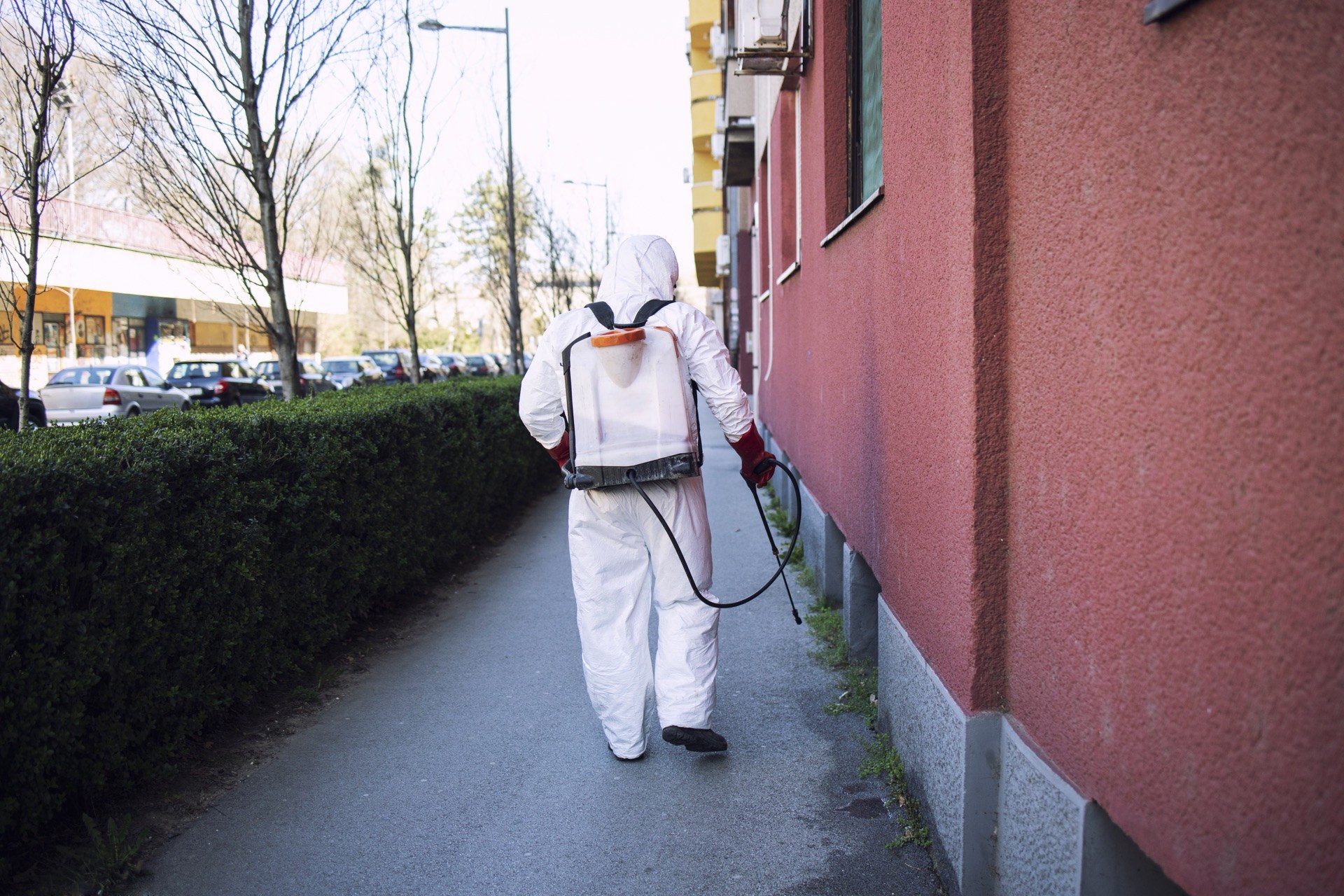
Use the downtime for the work a running line makes impossible: opening equipment, pulling compacted residue out of bases and spouting, sealing what the cleaning exposes, and resetting monitoring before the first shift back. The published research is blunt about why that order matters. When sanitation slips, the measured effectiveness of nearly every other pest tactic slips with it.
Most plants and distribution centers around Stark and Summit County are picking shutdown dates about now, somewhere between Christmas and the new year, or around a maintenance window in January. Maintenance gets a punch list for that week. Pest management usually does not, and it is the one week of the year when the hardest harborage in the building is reachable.
Sanitation Sets The Ceiling For Everything Else
This is not a slogan from a sanitation vendor. A 2019 review in the journal Insects, by Morrison and colleagues, pulled together the published data on how well control tactics work at different levels of cleanliness. Poorer sanitation reduced the efficacy of most tactics examined, by a mean of 1.3 to 17 fold compared with better sanitation. A few tactics came out neutral or mixed. The authors concluded that sanitation should be of the utmost importance to food facility managers who care whether anything else they do works.
A 2024 review in the same journal, by Bingham and Hagstrum, adds the part that belongs on a shutdown plan. Sanitation is not a one time cleaning process: it needs repeated cleaning, and structural modifications to equipment and facilities are sometimes what make cleaning possible in the first place. Modifying a piece of equipment so it can be cleaned is not something anyone does during a production week. It is shutdown work.
The Flour Depth Experiment, And What It Proved
The clearest measurement of what residue does comes from the pilot flour mill at Kansas State University. Brijwani, Subramanyam and Flinn ran two 24 hour heat treatments there and placed red flour beetle eggs and adults in rings holding flour at depths from 0.1 to 10 centimeters, then counted what lived. Their results were published in the Journal of Economic Entomology in 2012.
Egg mortality fell in a straight line as the flour got deeper. Adult mortality fell exponentially. A USDA Agricultural Research Service summary of the same work puts it in plant terms: flour an inch deep or more left adult mortality below 10 percent. Where the heat actually held, none of that mattered. On the third floor of the mill, every egg and every adult died at every depth, because the temperature climbed past 50 degrees Celsius and stayed there for hours. On the first floor, only the shallowest treatments, 0.1 and 0.2 centimeters, ever reached 50 degrees at all.
The authors drew the obvious conclusion: flour protected the insects only where temperatures stayed under 50 degrees, so removing the buildup is part of making the treatment work rather than a nicety to do afterward. The same physics applies to a cold corner of any building. A crack packed with product is a place where whatever you apply arrives weaker, later or not at all.
What Only Downtime Lets You Reach
Sort the building by what a running line protects, and the shutdown list writes itself.
| Where | What it holds | Why a production week cannot touch it |
|---|---|---|
| Bases and frames of floor mounted equipment | Compacted product and dust under the frame, often damp | It needs the machine locked out and partly apart, with maintenance in the room |
| Spouting, legs, conveyor returns, sifters | A film of residue through the whole path the product takes | Only openable when the system is empty and stopped |
| Overhead beams, ledges, cable trays, light fixtures | Dust that falls back onto anything cleaned below it | Cleaning overhead with product running underneath is not an option |
| Floor seams, expansion joints, drains | Wet residue, the sort that supports flies as well as beetles | Wet work needs the area cleared and real drying time afterward |
| Racking, dunnage and the back of the rack | Old stock, torn bags, spill nobody logged | Pallets have to come out, and in a busy month they never do |
| Dock seals, door sweeps, wall and pipe penetrations | The gaps that let the next population in | Repairs take the opening out of service for part of a day |
The last row is the one that pays for itself twice, because it is also the row an auditor can see from the floor. Our walkthrough of the receiving dock check covers what to look at once the doors are back in service.
Cold Weather Does Not Do This Work For You
A shutdown in an Ohio January invites a comfortable assumption: the building goes cold, so the insects go with it. The published development figures say otherwise. Purdue University Extension gives the Indianmeal moth a minimum of 64.4 degrees Fahrenheit for development at 20 percent relative humidity, an optimum of 86 degrees, and a maximum of 95. Egg to adult runs 25 days at 86 degrees, 30 days at 77, and stretches to 60 days at 68. A heated production area sits inside that band all winter.
An unheated warehouse at 35 or 40 degrees is a different thing, but it is a pause button rather than a treatment. Using cold to actually disinfest takes far more cold, held far longer. A USDA Agricultural Research Service study of Indianmeal moth and navel orangeworm found 48 hours below minus 15 degrees Celsius throughout the product showed potential as a disinfestation treatment, and noted that temperatures of 0 to 5 degrees Celsius should provide some disinfestation given suitable exposure periods. A 2018 study in the Journal of Pest Science needed 7 days at 0 degrees Celsius for complete mortality of Indianmeal moth eggs, 2 days at minus 10 for larvae, and found booklice eggs surviving 3 days at minus 15.
Nothing in a cold snap reaches the inside of a machine base either, which is where the population that restarts your spring usually sits.
Sequence The Week So The Cleaning Is Not Undone
- Walk it before anybody cleans. Trap counts, complaint records and a slow walk with a flashlight tell you which equipment to open. Cleaning everything equally is how a short shutdown runs out of hours.
- Dry clean before wet. Vacuum and brush residue out of seams first. Washing it in makes a paste that dries harder and feeds the next generation.
- Work top down. Overhead, then equipment, then floors and drains, so nothing lands on a surface that was finished yesterday.
- Dispose rather than relocate. Infested stock leaves the site. A back corner is not a quarantine.
- Seal after the clean, not before. Filling a crack that still has product in it just insulates what is living there.
- Reset monitoring last, and date it. A clean building with fresh traps in it is the baseline you will read the whole year against.
Make The Shutdown Part Of The Record
The federal standard does not go on holiday with the production schedule. Under 21 CFR 117.35, pests must not be allowed in any area of a food plant, and effective measures must be taken to exclude pests from manufacturing, processing, packing and holding areas. A shutdown is a chance to show how, with dated cleaning records, photographs of the harborage that got removed, a list of the openings that got sealed, and the new trap baseline.
That paperwork is also what an auditor reads first. We went through the documentation side in detail in what a food plant audit actually checks, and the monitoring side in finding stored product pests in a warehouse. Read together with the trend line from the restart weeks, they answer the only question that matters at the next audit: is the number going down, and do you know why.
State Termite has worked in Northeast Ohio since 1933, and our commercial pest management programs run on documentation and reporting rather than on a signature at the door, for food manufacturing, warehousing and distribution, hospitality, healthcare and multi family housing across Stark, Summit, Portage, Wayne and Tuscarawas counties. If you have a shutdown on the calendar, tell us the dates now rather than in week one. Schedule a walkthrough through our request a quote page or call 330-494-6199.
Frequently Asked Questions
Will a shutdown deep clean get rid of stored product insects by itself?
Not on its own, and treating it as a one off is the usual mistake. The 2024 review by Bingham and Hagstrum in Insects says sanitation is not a one time cleaning process and needs repeated cleaning, sometimes with equipment modified so it can be cleaned at all. What a shutdown clean does is set the ceiling for everything else: the 2019 review by Morrison and colleagues found poorer sanitation cut the efficacy of most control tactics by a mean of 1.3 to 17 fold.
Will a cold warehouse over the winter kill insects in the racking?
It pauses them rather than killing them. A USDA Agricultural Research Service study found 48 hours below minus 15 degrees Celsius throughout the product showed promise as a disinfestation treatment, and a 2018 Journal of Pest Science study needed 7 days at 0 degrees Celsius for complete mortality of Indianmeal moth eggs and 2 days at minus 10 for larvae, with booklice eggs surviving 3 days at minus 15. An unheated Ohio warehouse at 35 or 40 degrees Fahrenheit is nowhere near that, and the heated side of the building stays inside the development range all winter.
What should we clean first if the shutdown is only two days?
The places a running line protects, starting with the equipment your monitoring already points at. The pilot mill study from Kansas State is the argument: flour an inch deep or more left red flour beetle adult mortality below 10 percent where temperatures stayed under 50 degrees Celsius, so compacted residue inside bases, spouting and sifters is doing more harm than the dust on an open floor. Overhead ledges come next, because they undo floor work later.
Should our pest control company be on site during the shutdown?
At the start and at the end, at least. A walk before anyone cleans marks the harborage worth opening, and a walk afterward records the exclusion repairs, resets monitoring on a clean building and dates the baseline. In between, the work belongs to sanitation and maintenance, and the plant knows its own equipment better than any visitor does.
Do trap counts mean anything right after a deep clean?
Yes, as a starting line rather than a verdict. A trap set in a freshly cleaned building and read over the first weeks back tells you whether the clean reached the harborage or missed it. Counts that climb in one corner while the rest of the grid stays flat point at something that survived in that corner, which is a far more useful finding than a species list.
Sources
- Morrison et al., Sanitation Improves Stored Product Insect Pest Management, Insects (2019)
- Bingham and Hagstrum, Importance of Sanitation for Stored-Product Pest Management, Insects (2024)
- Brijwani, Subramanyam and Flinn, Impact of Varying Levels of Sanitation on Mortality of Tribolium castaneum During Heat Treatment of a Pilot Flour Mill, Journal of Economic Entomology (2012)
- USDA Agricultural Research Service, research summary on heat treatment and flour depth
- Purdue University Extension, Stored Product Pests (E-223)
- USDA Agricultural Research Service, Johnson (2007) on cold storage disinfestation
- Journal of Pest Science (2018), low temperature efficacy against Plodia interpunctella and Liposcelis bostrychophila
- US FDA, 21 CFR 117.35, Sanitary operations