What Happens On The Day Of A Termite Treatment
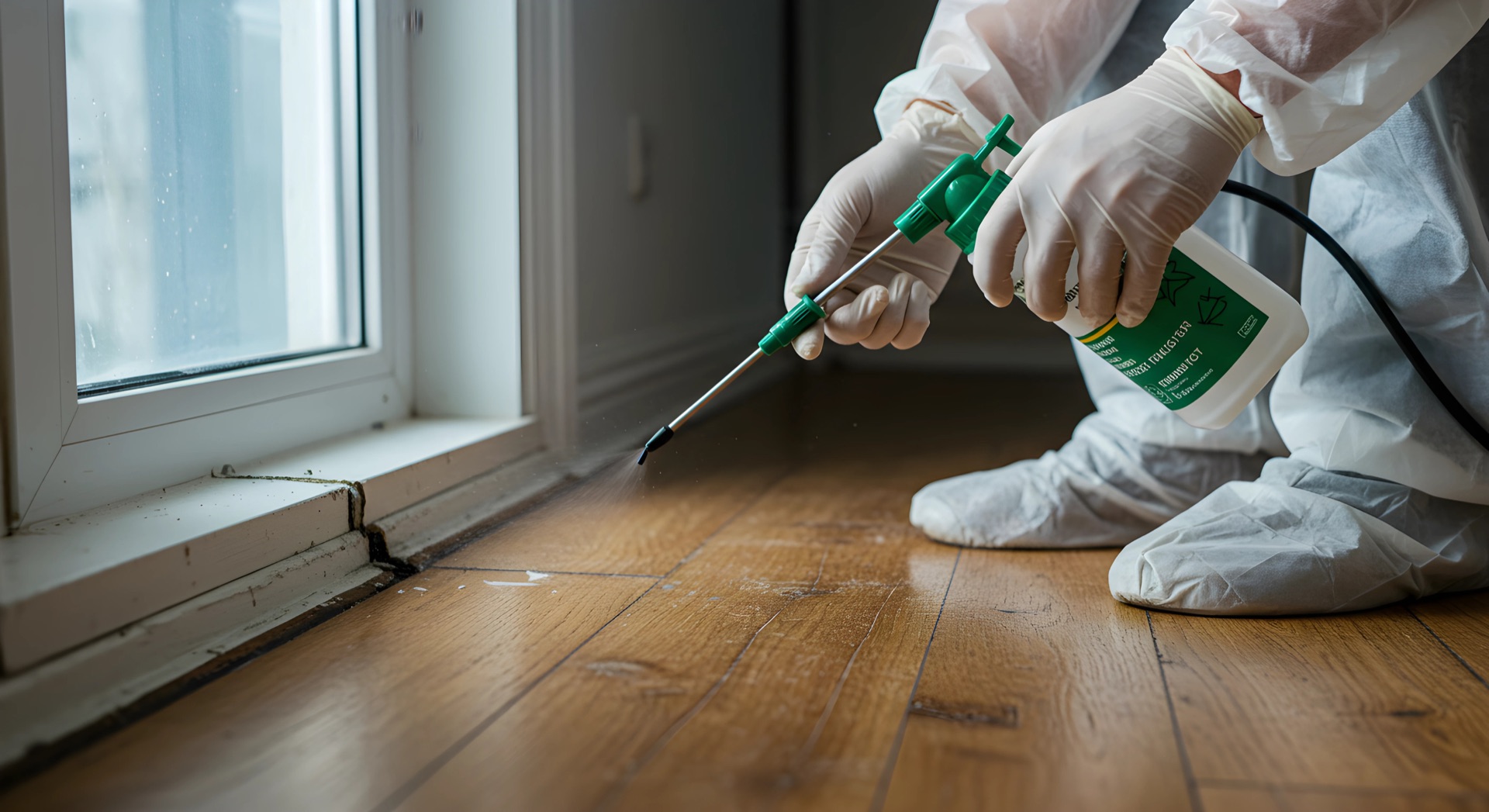
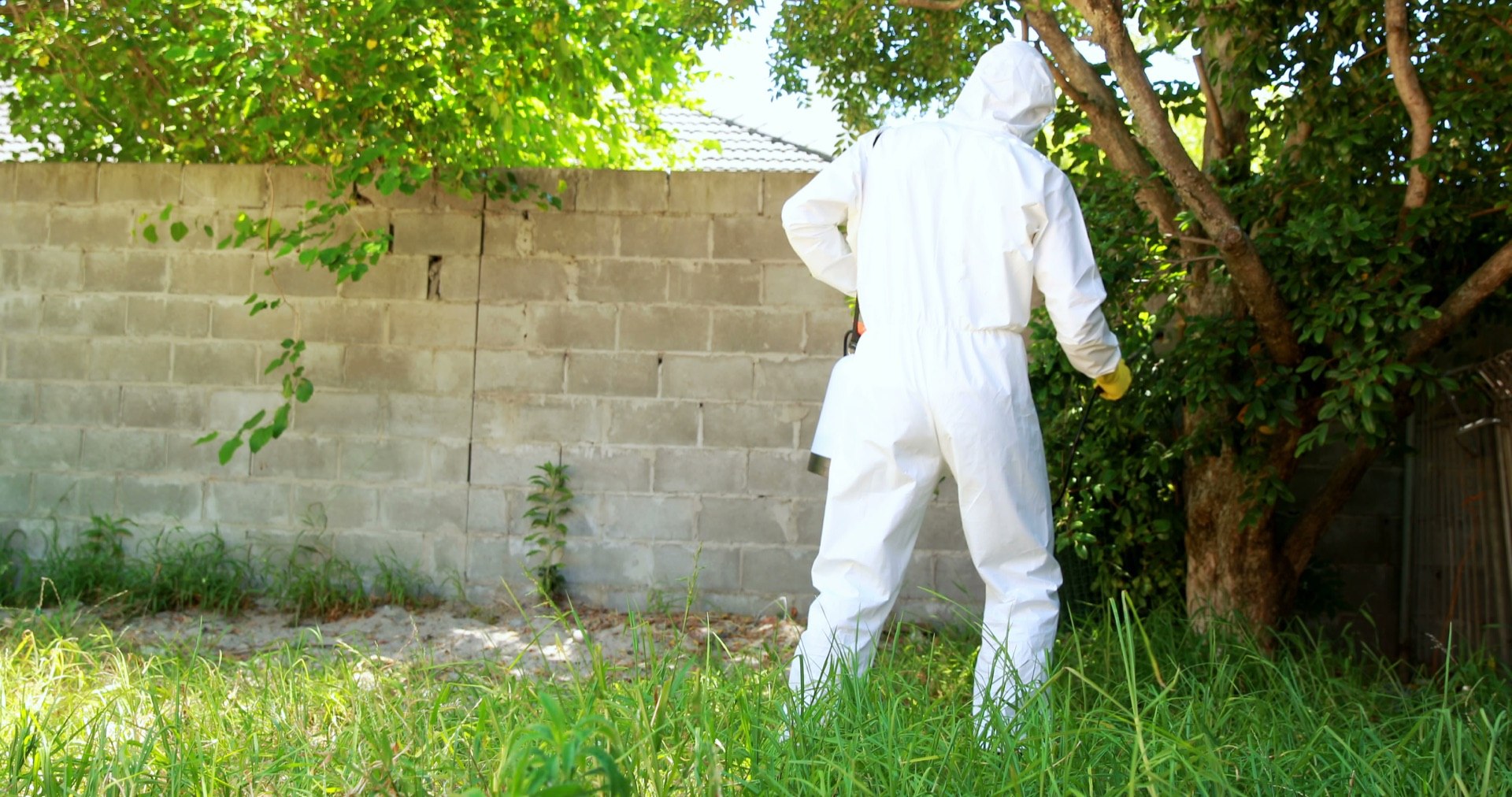
Almost all of it happens outside. A crew opens a narrow trench along the foundation, puts termiticide into the soil at the rate the product label sets, rods deeper where the footing sits low, and drills concrete only where the trench cannot reach. A bait installation is the quiet version of that visit.
What decides the shape of the day is not the room where you found the swarmers. It is how the house meets the ground: basement or slab, crawl space or none, how much concrete is poured tight against the wall, and how deep the footing is.
Why The Work Is Outside When The Damage Is Inside
Ohio's termite is the eastern subterranean termite, and Ohio State University Extension names it the most common termite in the state. The colony lives in soil. The wood it eats is a feeding site it reaches from underground, which is why a treatment aimed at the soil is aimed at the actual problem and a treatment aimed at the baseboard is not.
The same Extension fact sheet sets the standard the work has to meet: a termiticide has to be applied as a continuous barrier in the soil next to and under the foundation, because untreated gaps let termites simply go around the treatment. Continuous is the word that creates the whole day. It is why the crew follows the foundation line all the way around the house instead of treating the corner where somebody saw mud tubes, and it is why termite control runs off a plan drawn at the inspection.
The Trench Has To Reach The Footing
How deep that trench goes is written down. State structural pest programs set what it has to reach. North Carolina's structural pest control program, for example, specifies treatment by trenching, or trenching and rodding, from the top of the grade to the top of the footing or to a minimum depth of 30 inches, at a rate of 4 gallons per 10 linear feet per foot of depth. The depth that counts is the distance from the soil surface down to the footing, not how deep anyone felt like digging.
Rodding is the part people have never heard of. The University of Arkansas Cooperative Extension describes holes made about 12 inches apart in the bottom of the trench so the liquid is injected down the soil column rather than puddled on top of it, and notes that where the top of the footing sits more than 12 inches down, large volumes of chemical are required. Ohio State University Extension puts the practical total at often 150 or more gallons of prepared solution for one house, with specialized equipment to deliver it. University of Kentucky entomologists list that equipment plainly: powerful masonry drills, large capacity spray tanks and long metal rods for injecting soil.
Those numbers are the honest answer to why the truck is parked there for a while, and why the scope varies so much from house to house. What drives that scope is the subject of our piece on what a termite job is built on.
| Part of the house | What happens there | What it looks like afterward |
|---|---|---|
| Open soil along the foundation | Trenched along the wall and rodded down toward the footing | A backfilled strip of disturbed soil, plants and mulch put back |
| Patio, stoop, walk or attached garage slab | Drilled at intervals so the soil underneath can be reached | A line of small patched holes a few inches off the wall |
| Basement floor and interior partition walls | Drilled where the plan calls for it and injected under pressure | Patched holes following the wall line and the utility penetrations |
| Crawl space with a dirt floor | Trenched and rodded along the foundation and around piers and pipes | Worked soil along the walls, not across the whole floor |
| A crawl space nobody can get into | Treated from grade to the top of the footing, or to a minimum of four feet | Work done from outside, with the access problem written into the plan |
| A bait route instead | Stations set into the soil around the structure, no trench, no drilling | Round caps sitting flush with the ground, checked on a schedule |
Where Concrete Has To Be Drilled
A trench stops where a patio starts, and termites do not. Purdue University Extension describes the answer: the termiticide is injected through holes drilled in the slab at prescribed intervals along foundation walls, partitions and utility openings, under pressure, at the rate the label gives. The holes exist because the soil under that concrete is part of the same continuous zone as the soil you can see, and leaving it out leaves a door.
This is worth asking about before the day rather than after. Where will holes go, how many, and how will they be closed. It is also the single biggest reason a house that is ringed with concrete, a wrap-around patio, a poured walk, a finished basement floor, often ends up on a Sentricon bait route instead, which puts stations in the soil and eliminates the colony including the queen with no drilling and no trenching. How a station does that is the subject of our post on how a bait station takes out a colony.
The Crawl Space Half Nobody Photographs
Under an older Stark County house, the same trench runs on the inside. University of Missouri Extension describes the soil along the interior foundation wall being trenched in the same manner as the exterior, along with the soil around foundation supports such as pillars and piers. Alabama Cooperative Extension and the University of Arkansas describe the accessible version as trenching and rodding around the foundation and all piers and pipes, and the inaccessible version as treating from grade down to the top of the footing or to a minimum of four feet.
One thing the Arkansas guidance explicitly does not call for is soaking the entire crawl space floor. The target is the soil against the structural elements, which is where the termites travel. If the perimeter down there is stacked with stored boxes, nobody can trench it, so clearing a path along the walls before the visit is worth the hour it takes.
What To Move Before The Crew Arrives
Everything on this list exists because of the trench. It follows the wall, and it cannot jump over anything parked on the line.
- The strip along the foundation. Firewood, bagged mulch, planters, trash cans, lattice panels, the stack of pavers from two summers ago. All of it has to come off the wall, and most of it should not go back against the house anyway.
- Shelving and boxes pushed against basement walls. If the plan includes interior drilling, the crew needs the wall line and the utility penetrations, not a path between totes.
- Access. The crawl space hatch, the garage, a gate wide enough for equipment, and the side of the house behind the locked fence.
- Pets. Indoors and away from the work line. Our treatments are pet safe and kid safe, and what decides when a treated area is normal again is the product label rather than anyone's opinion, which we covered in how long you have to stay out after a treatment.
- A well or a cistern. Say so during the inspection, because labels limit soil work near one and can change the method entirely. Our post on pest control on a well and septic property walks through what changes.
You usually do not need to be home for exterior work. Interior access is the exception, and that is settled at the termite inspection rather than on the morning of the job.
A Bait Installation Is A Different Kind Of Day
Nothing gets dug and nothing gets drilled. Stations go into the soil around the structure, and the route is what does the work over the following months rather than the visit itself. Ohio State University Extension drew the distinction that still matters: Sentricon is labeled to be used as the sole measure to achieve termite control, with no supplementary soil treatment required. The same Extension guidance says monthly inspections of a baiting system usually are warranted, except during inclement winter weather, which is the part worth hearing before you choose it. The installation is the short part.
After The Truck Leaves
A soil treatment is not a light switch. University of Missouri Extension puts the visible effects of a soil treatment in the first few weeks, so workers that are already inside the wood are dying off over that stretch rather than that afternoon. Two things matter afterward. Keep the paperwork, because what was applied and where is the record that tells the next inspector what the house has. And leave the treated soil alone: a downspout trench, a new patio footing or a regraded flower bed cuts straight through a barrier that only works by having no gaps, which is the subject of whether an old treatment still protects a house.
If you are at the stage of wondering what a treatment would involve at your address, the walk comes first. State Termite has worked on Northeast Ohio houses since 1933, and an inspection of the foundation, the basement or crawl space and anywhere wood meets soil is what decides between a trench and a bait route. The inspection fee is waived when you go with us for treatment. Call 330-494-6199 or schedule an inspection.
Frequently Asked Questions
Will the crew have to drill my basement floor?
Only where the soil underneath cannot be reached any other way. Purdue University Extension describes termiticide being injected through holes drilled in the slab at prescribed intervals along foundation walls, partitions and utility openings, under pressure at the labeled rate. A house with open soil all the way around may need very little drilling, and a house ringed by a patio, a walk and a finished slab may need a good deal. A bait system needs none at all.
How deep does the trench around the house have to be?
Deep enough to reach the footing. North Carolina's structural pest control program specifies trenching, or trenching and rodding, from the top of the grade to the top of the footing or to a minimum depth of 30 inches, applied at 4 gallons per 10 linear feet per foot of depth. The University of Arkansas Cooperative Extension adds that rodding holes go about 12 inches apart in the bottom of the trench, and that a footing more than 12 inches down calls for large volumes of liquid.
Do I have to be home, and do the pets have to go somewhere?
For exterior work you usually do not need to be home, and interior access is the exception that gets arranged in advance. Pets belong indoors and away from the work line while a crew is trenching and injecting. Our treatments are pet safe and kid safe, and the product label, not an opinion, decides when a treated area is normal again.
How soon does a soil treatment start working?
Within weeks rather than the same afternoon. University of Missouri Extension puts the effects of a soil treatment in the first few weeks. The treated soil keeps working after that, which is why disturbing it later with a trench, a footing or a regrade matters more than most homeowners expect.
Is a bait installation less work than a liquid treatment?
On the day, yes, and over the year, no. Stations go into the soil around the structure with no trenching and no drilling, but the job is carried by the monitoring route afterward. Ohio State University Extension's guidance is that monthly inspections of a baiting system usually are warranted, except during inclement winter weather, and it notes that Sentricon is labeled as the sole measure to achieve termite control without a supplementary soil treatment.
Sources
- Ohio State University Extension, Subterranean Termite Control (HYG-2092, archived)
- Ohio State University Extension, Termite Baiting Systems (HYG-2092A, archived)
- North Carolina Department of Agriculture and Consumer Services, Post-Construction Subterranean Termite Control
- University of Arkansas Cooperative Extension, Termite Prevention and Control Methods (AG1154)
- Purdue University Extension, Termite Control (E-4)
- University of Kentucky Entomology, Termite Control: Answers for Homeowners (ENTfact-604)
- University of Missouri Extension, Subterranean Termites (G7420)
- Alabama Cooperative Extension System, Subterranean Termite Control Products for Alabamians