Commercial Fly Control: What The Doors And Screens Have To Do
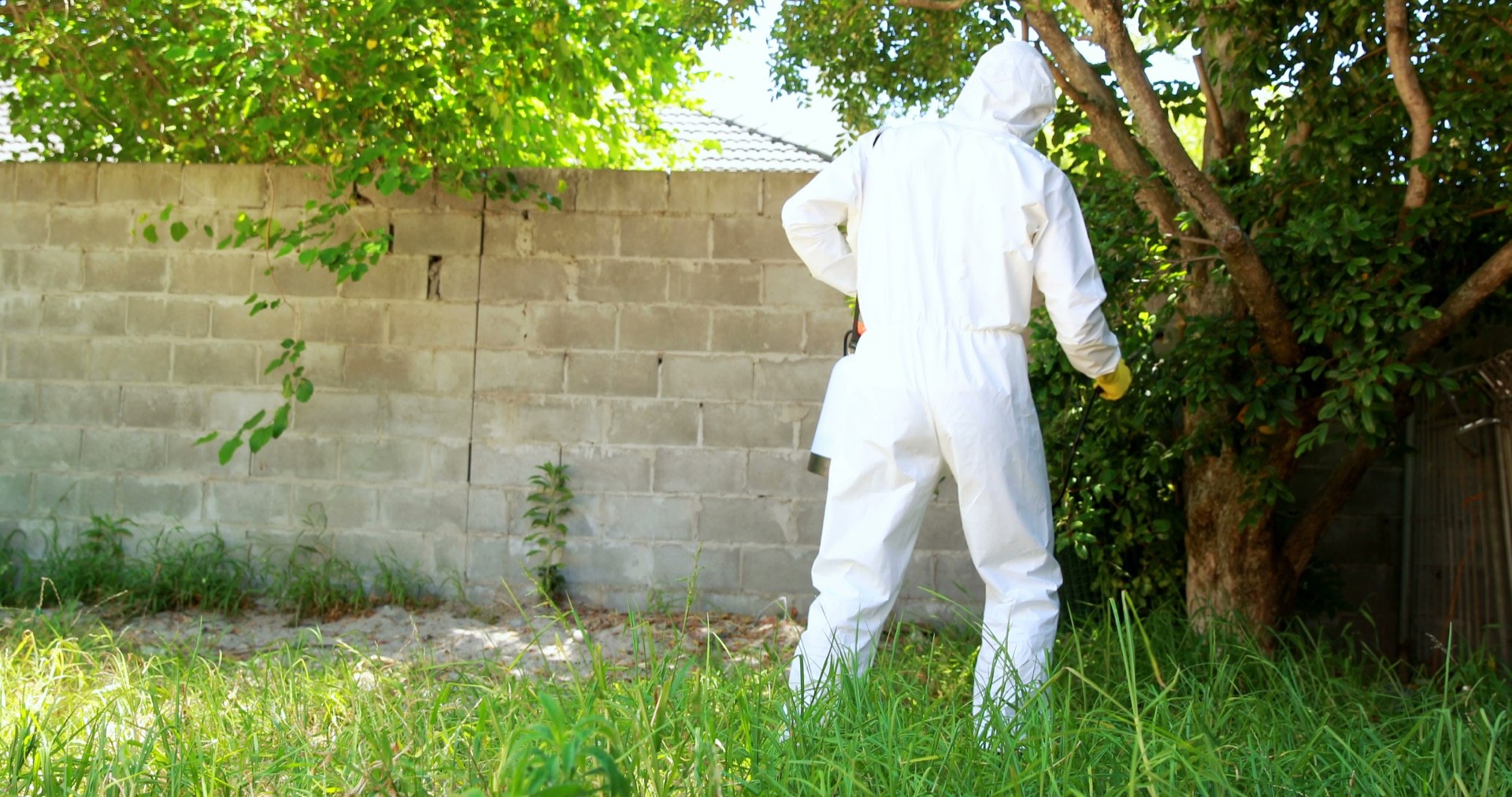
Flying insects get into a commercial building through openings somebody keeps open on purpose. Ohio's food safety code names three acceptable ways to protect an opening that has to stay open, and it says where an insect light trap may not hang. Most of commercial fly control is doors, screens and dock habits rather than anything sprayed.
October is when the shell gets its annual test in Stark and Summit counties. The first hard freeze sends whatever has been living in the loading yard, the weeds along the fence and the dumpster pad toward the warmest wall it can find. A back door whose closer gave up in August is the week's discovery.
What Does The Ohio Rule Say About An Open Door?
It gives three protections, and only three. Rule 3717-1-06.1 of the Ohio Administrative Code, part of the State of Ohio Uniform Food Safety Code, requires the outer openings of a food service operation or retail food establishment to be protected against insects and rodents by filling holes and gaps along floors, walls and ceilings, by closed tight fitting windows, and by solid self closing doors. Where windows or doors are kept open for ventilation or another purpose, the rule requires the opening to be protected by sixteen mesh to one inch screening, by properly designed and installed air curtains to control flying insects, or by other effective means. It lets that last requirement go only where flying insects and other pests are absent because of the location, the weather or another limiting condition.
A food plant is not a food service operation, and it answers to the federal good manufacturing practice rule instead. Under 21 CFR 117.35(c), pests must not be allowed in any area of a food plant, and effective measures must be taken to exclude pests from manufacturing, processing, packing and holding areas and to protect food on the premises from contamination by pests. The federal rule sets the duty without naming a screen size, so the food code figure is the only published number either rule hands you.
| The opening | What the rule asks for | How it fails in practice |
|---|---|---|
| Back door, customer door | Solid, self closing, tight fitting | A closer that no longer pulls the door shut, a wedge under it on a warm afternoon, daylight at the bottom corner |
| Window or service window kept open | Sixteen mesh to one inch screen, a properly designed and installed air curtain, or other effective means | A torn lower corner, a frame that does not seat, a screen swung out of the way and left there |
| Ventilation opening | Screening at the same mesh | Coarse hardware cloth that stops a mouse and passes every fly in the lot |
| Dock door during a delivery | Other effective means, which here means how the door is operated | Open all shift, open with no trailer in position, with the dumpster and grease bin parked beside it |
| Door into a mall or attached structure | The larger building's outer openings have to be protected instead | Nobody owns the shared vestibule, so it stands open and the tenant gets the flies |
Why The Mesh Number Is Worth Knowing
Sixteen mesh to one inch means sixteen openings per inch of screen. That is checkable on site with a tape measure and good light, which is unusual for a pest requirement and useful when a contractor asks what to order. It is also the only dimension either rule gives, so a plant the food code does not cover still has a number to specify against.
A screen protects an opening while it is intact and in the opening, and not a minute longer. The cheapest failure in any building is a correct screen with a hand sized tear at the bottom, usually where a cart or a hose caught it. Then there are the openings nobody calls openings: the gap under a door, the chase where conduit comes through a block wall, the dock leveler pit. Those are sealing jobs rather than screening jobs, and they are the same ones that let mice in, which is why a perimeter program works the outside of the wall before anything gets treated inside.
An Air Curtain Is Equipment, And It Has A Standard
The rule credits an air curtain only when it is properly designed and installed, and there is a published standard behind those words. NSF/ANSI 37 sets minimum sanitation and performance requirements for the materials, design, construction and performance of air curtains for entranceways in food and food service establishments, including customer and service doors, service windows and cooler entries. The standard is explicit that it does not govern installation: the applicable codes do.
Read practically, that puts three questions on a facility manager. Was the unit rated for an opening this size, or for a shorter one? Does it run every time the door opens, rather than only when someone remembers the switch? Is the airflow still what it was, with clean intakes and nothing turned down? Some health districts also inspect against their own air velocity figure for a service entrance, so the sanitarian who inspects your building is the person to ask before anything is ordered.
Where An Insect Light Trap May Not Hang
The same Ohio rule covers insect control devices. A device that electrocutes or stuns flying insects has to be designed to retain the insect inside the device. It may not be located over a food preparation area, and it may not sit where dead insects or insect fragments could fall onto exposed food, clean equipment, utensils and linens, or unwrapped single service articles. In a plant the same idea arrives as an audit finding instead of a code citation, and it reads the same way: nothing hanging over exposed product.
That leaves the device where it belongs anyway, between the opening and the room you are protecting. Our flying insect control program uses light traps alongside drain treatments and exterior work, and a trap earns its place twice: once for what it catches, and once for the record of what it caught. A catch that doubles in a week is telling you about a door or a drain, and a bigger trap will not change the reading.
The Dock Is The Opening You Cannot Screen
A dock door is a hole in the wall the size of a trailer, and no screen fits it. It lands under the rule's third option, other effective means, and in practice that means how the opening is run: the door down when no trailer is in position, the dock seal doing its job, the pad washed, the dumpster and grease bin lidded and away from the doorway.
The arithmetic explains why door habits beat spraying. University of New Hampshire Extension reports that a female house fly lays 75 to 150 eggs in a cluster and 350 to 900 over her lifetime, and Purdue Extension puts a generation from egg to adult at as few as seven to ten days. So the useful question is never how many flies came through the dock this morning. It is whether anything inside will host the next generation: a floor drain, a condensate line, a spill under a conveyor. For a kitchen, that sanitation case is laid out in our guide to what a health inspector checks, and the small flies that breed in a drain rather than in garbage are a different identification problem with a different fix.
A Shell Walk To Do Before The Cold Settles In
- Stand inside each exterior door at midday with the lights off and look for daylight at the sill, the hinge side and the strike.
- Watch every self closing door close from fully open, with nothing holding it and nobody helping.
- Walk the screens: right mesh, seated in the frame, no tears, nothing propped open behind them.
- Confirm each air curtain runs when its door opens, and find the paperwork that says what opening height it was rated for.
- Move any light trap that hangs over exposed product or a prep surface, and put lamp and board changes on a written schedule.
- Close dock doors between trailers, and look at the dock seals and the leveler pit while you are there.
- Pull the cover off the wettest floor drain in the building and look at the underside of it.
- Write down what you found and what you fixed. An auditor reads the record of corrections more closely than the sighting that started them.
- Keep slow gray flies on a sunny window in a separate column. Those are usually cluster flies overwintering in a wall, which is not a sanitation failure and does not respond to anything you do at the dock.
If the flies in your building have outlasted two rounds of treatment, the next step is a walk of the shell rather than a third round. We have been doing commercial work in Stark, Summit, Portage, Wayne and Tuscarawas counties since 1933, from food plants and warehouses to restaurants and care buildings. Ask for a free estimate through our request form or call 330-494-6199, and bring your light trap counts to the walkthrough.
Frequently Asked Questions
Does an air curtain satisfy Ohio's food code in place of a screen?
Yes, when it is properly designed and installed. Rule 3717-1-06.1 of the Ohio Administrative Code lists three protections for an opening kept open: sixteen mesh to one inch screening, properly designed and installed air curtains to control flying insects, or other effective means. NSF/ANSI 37 is the equipment standard for air curtains in food and food service establishments, and it says plainly that installation is governed by the applicable codes rather than by the standard, so your local health district is the one that signs off on the install.
Can an insect light trap hang over the prep table?
No. Ohio's rule requires a device that electrocutes or stuns flying insects to be designed to retain the insect inside the device, and it bars placing one over a food preparation area or anywhere dead insects or insect fragments could fall onto exposed food, clean equipment, utensils and linens, or unwrapped single service articles. The useful position is between the opening and the room you are protecting anyway.
What does sixteen mesh to one inch actually mean?
Sixteen openings per inch of screen. It is the figure Ohio's food safety code names for screening an opening that has to stay open, and because it is a dimension rather than a judgment call, it is one of the few pest requirements a facility manager can verify with a tape measure before ordering anything.
We run a warehouse, not a restaurant. Does any of this apply to us?
The food service rules do not, but the openings are the same openings. A food plant answers to 21 CFR 117.35(c), which says pests must not be allowed in any area of a food plant and that effective measures must be taken to exclude them, without naming a screen size. A non food warehouse usually answers to whatever its customers' audits ask for, and those audits ask about doors, screens, dock practice and records.
Our light trap catch jumped this month. What should we check first?
The openings, then the water. A jump in catch is a reading on the building rather than on the trap: a door that stopped latching, a dock left open through a shift, a screen torn in a storm. After that, look for what is hosting a generation indoors, which is nearly always something wet, such as a floor drain, a condensate pan or a spill under equipment. A rising count alongside clean sanitation records usually means something is open.
Sources
- Ohio Administrative Code, Rule 3717-1-06.1 (State of Ohio Uniform Food Safety Code)
- eCFR, 21 CFR 117.35 (Sanitation and pest control in a food plant)
- NSF, Food Equipment Standards (NSF/ANSI 37, air curtains for entranceways)
- University of New Hampshire Extension, House Fly (Fact Sheet 21)
- Purdue Extension, Fly Control Around the Home (E-7)